“I lost my contacts a few days ago. One minute I had them, then they vanished. I did not remove anything from the phone, and my email accounts are unchanged. There’s nothing on the iCloud as well. It’s a company phone and they don’t pay for the extra storage. So the automatic saves don’t happen.What is going on?” – Sarah Cook, Lafayette, Louisiana
If your iPhone contacts vanished after an update, a sync error, or an accidental deletion, don’t panic. Most cases are fixable in under two minutes, and you don’t need to erase your phone for the majority of them. We’ve spent the past decades helping users recover lost mobile data at Stellar, and iPhone contacts are one of the most common, and most fixable, losses we see. Most people jump straight to a factory-reset restore when they don’t need to. Five of the eight methods below take under two minutes and touch nothing else on your phone.
Before going straight to a backup folder, try these quick fixes first to recover your lost iPhone contacts.
Before you start: Apple will never ask you to call a phone number to recover iCloud data. Do all of this through Settings or iCloud.com directly — not a link or number from a search ad or pop-up
Method 1: Turn iCloud Contacts Off and then On
When iPhone contacts vanish on their own, immediately turn your iCloud contacts off, then turn them on. If there’s an iCloud sync glitch rather than an actual deletion, refreshing the connection between your iPhone and Apple’s servers often brings everything right back.
- Open Settings, tap your name at the top. Select iCloud.
- Under Apps Using iCloud, find Contacts.
- Switch the toggle off.
- When asked, tap Keep on My iPhone.
- Wait about 15 seconds, then switch Contacts back on.
- Choose Merge so your cloud records combine with what is already on your phone.
In testing on an iPhone 14 (iOS 17.6), this brought back all synced contacts within about 10 seconds of re-enabling. This would not have worked if the contacts were actually deleted rather than just failing to sync.
Note: Menu paths differ in iOS versions. On iOS 17 it’s Settings > [Your Name] > iCloud > Apps Using iCloud. On iOS 16 and earlier, it’s Settings > [Your Name] > iCloud, with Contacts listed directly rather than under “Apps Using iCloud.”
Method 2: Check That Your Email Accounts Are Still Syncing
If the missing names belonged to coworkers or people you mostly email, there might be a problem with a linked account rather than iCloud itself. This usually happens right after an iOS update or after logging back into an account.
- Open Settings, scroll to Apps, and tap Mail or Contacts.
- Select Accounts.
- Tap into each account you have signed into, such as Gmail, Outlook, or an Exchange account.
- Make sure the Contacts toggle for that account is switched on.
If you lost your data after a recent update, our guide to recovering iPhone data after an iOS update covers the scenario in more depth.
Method 3: Look Under Hidden Lists
It’s obvious, but plenty of people skip this step and jump straight to a full restore. A contact you deleted on purpose, or by accident, often sits in a holding area.
- Open the Contacts app.
- Check any group accounts or temporary lists that might be hiding a contact from your main view.
If the quick fixes above did not bring your data back, the next stop is iCloud.com. iCloud pulls from an archived snapshot of your contacts rather than a full device backup, which means you do not have to erase your iPhone to use it.
Method 4: Restore Archived Contacts Through iCloud.com
You can restore your contacts from iCloud archived folders. The tradeoff is that this replaces your current contact list with whichever archive you pick, so anything you saved after that archive date could get overwritten. Although iCloud does take a safety snapshot right before the restore happens.
- On a computer or phone browser, go to iCloud.com.
- Sign in using the Apple ID linked to your iPhone.
- Scroll down to Data Recovery, or go to Account Settings, then Advanced.
- Click Restore Contacts.
- Browse the archived versions, which are organized by date and time.
- Select an archive from before you lost the contacts, then confirm the restore.
When you use iCloud.com to restore your lost contacts, you need to be aware of two important details regarding your saved backups.
The system organizes your saved backups by the exact time of day they were created, not just by the calendar date. If your phone synced with iCloud multiple times in a single day, you might see several options for that same date. You may need to try restoring two or three different versions before finding the exact one that still has your missing contacts.
| “The recovery window is shorter than most people expect. Many assume iCloud keeps backups for a full 30 days, actual testing shows that it only saves about 20 days of usable data. Because of this shorter timeline, it is important to start the recovery process immediately.” – Rohit Mayur, Sr. Software Developer, Stellar Data Recovery |
You can recover deleted iPhone Contacts from an iCloud Backup or an iTunes (Finder for Mac) backup. These definitely work, but there’s a catch, both wipe your iPhone clean before restoring your backed up data.
Method 5: Restore Your iPhone From an iCloud Backup
This requires erasing your iPhone completely through Erase All Content and Settings, so treat it as a last resort rather than a first try. It is essentially a factory reset, so if you want a closer look at what it does to your other data , check out our post on recovering iPhone data after a factory reset.
- Confirm a backup exists under Settings, your Apple ID, iCloud, then iCloud Backup.
- Go to Settings, General, Transfer or Reset iPhone, then Erase All Content and Settings.
- Once your phone restarts, walk through setup until you reach the Apps and Data screen.
- Choose Restore from iCloud Backup and sign in with your Apple ID.
Select the backup from before your contacts disappeared.
Method 6: Restore Using Finder or iTunes
Similar idea, different tool. This one overwrites your iPhone with whatever snapshot is stored on your computer, so double-check the date before you start.
- Plug your iPhone into your Mac or PC with a Lightning or USB-C cable.
- Open iTunes on Windows, or Finder if you are on macOS Catalina or newer.
- Click your iPhone icon, then head to the Summary or General tab.
- Click Restore Backup and choose the file with the date you need.
Method 7: Recover Contacts From an iTunes (Finder) Backup with iTunes Backup Extractor
A standard iTunes restore overwrites everything on your phone. However, an iTunes backup extractor, such as the one built into Stellar Data Recovery for iPhone, fetches the .backup folder stored on your computer’s hard drive. You can look through folder by folder and then restore the desired data.
- Download, install, and run Stellar Data Recovery for iPhone on your computer.
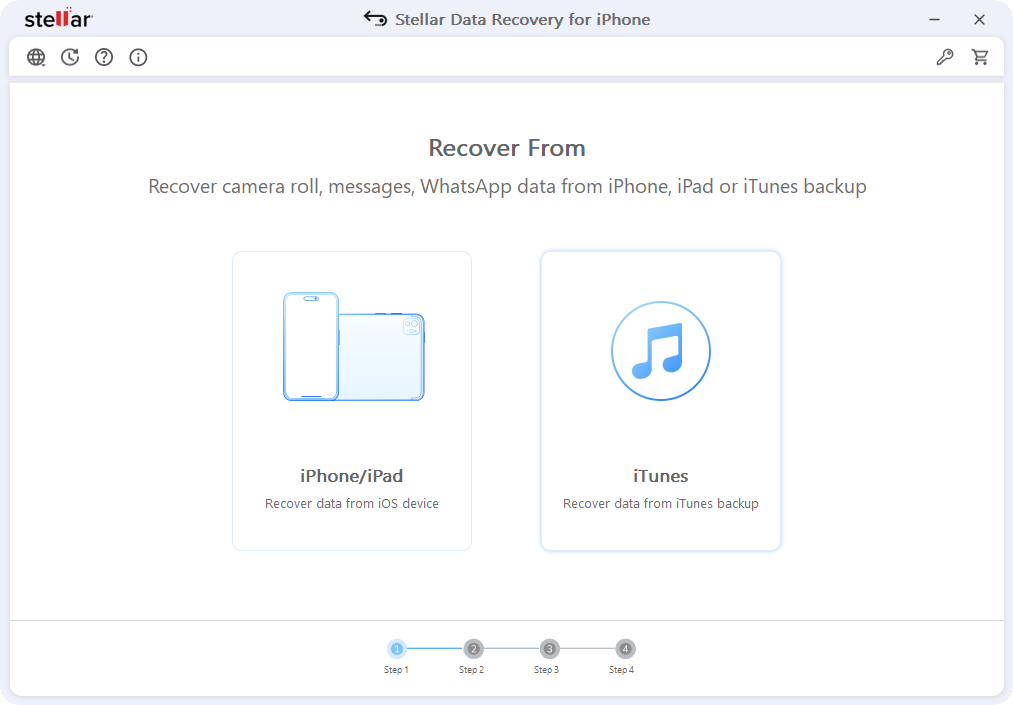
- Go to the “Recover data from iTunes backup” module, from the main menu.
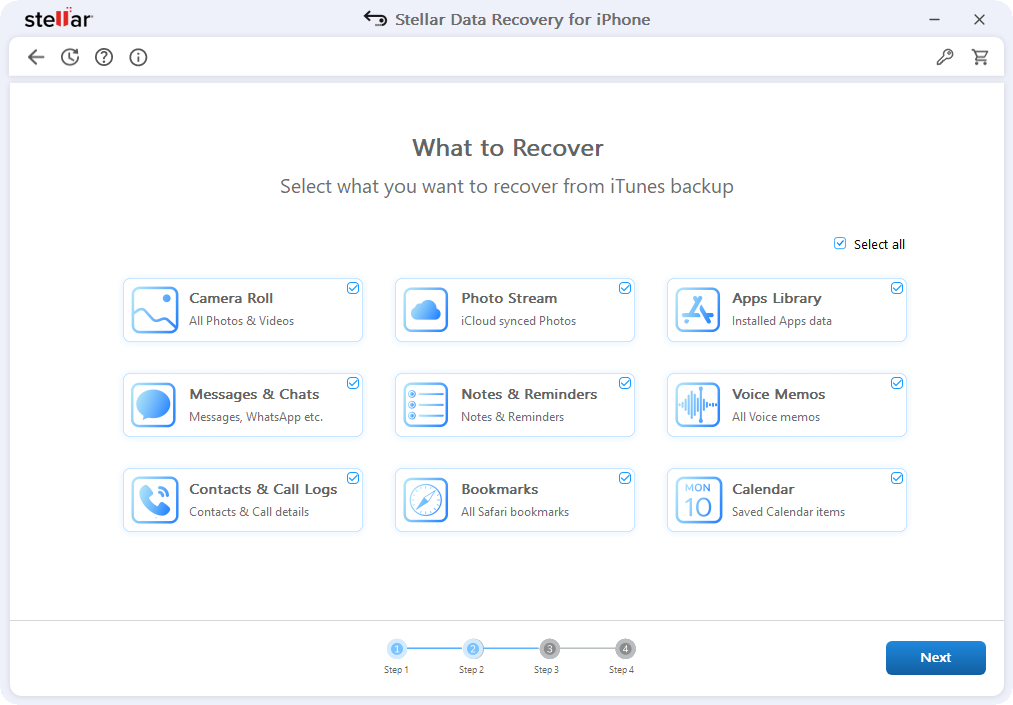
- In the next window, select the type of data you want to recover, such as Contacts and Call Logs, hit Next.
- The software finds local iTunes backup folders on your computer.
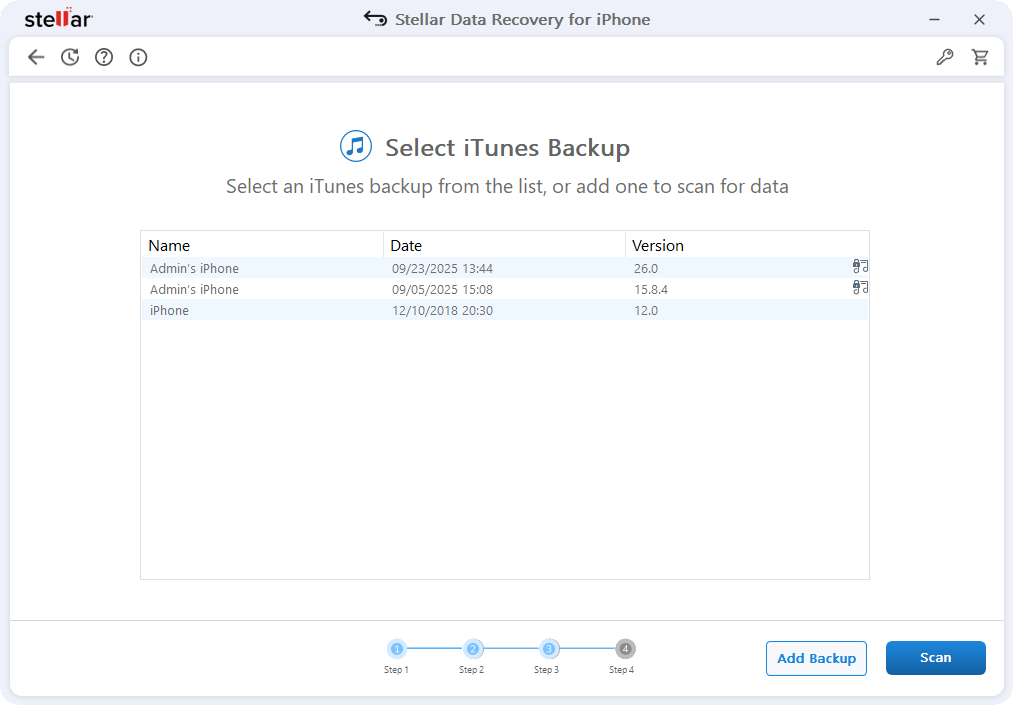
- Select the backup you want, then run a scan to find the lost contacts from that backup.
- Preview the names, numbers, and email addresses.
In a test recovery from a 2-month-old iTunes backup, our team pulled back 340 of 350 contacts, missing only entries added in the days right before the backup was made. Names, numbers, and linked email addresses all previewed correctly before export.
The tool lets you export up to 10 contacts for free. You can get the paid plan for unlimited recovery. If you want to recover more than 10 contacts, you need to upgrade to a paid version. You can try similar process with your Finder backup on Mac, the tool works there too.
Sometimes, a backup is just not available. Maybe you never turned on iCloud Backup, or the contact was deleted straight from the device with nothing saved anywhere else. That doesn’t mean those iPhone contacts are unrecoverable; you can still scan your device with an iPhone data recovery tool to get back your lost or deleted iPhone contacts.
Also, if you are dealing with more than just missing contacts names, a deep scan can help. iPhone data recovery tools can recover any deleted data without a backup, including photos, videos, messages, and more.
Method 8: Run a Deep Scan with Data Recovery Tool
This is the option for when everything else comes up empty, no iCloud backup, no iTunes backup, nothing. A deep scan looks directly at your iPhone’s internal storage for traces of deleted records that have not been overwritten yet. You can do this with Stellar Data Recovery for iPhone. Download and install Stellar Data Recovery for iPhone on your Mac or PC. (Works on both)
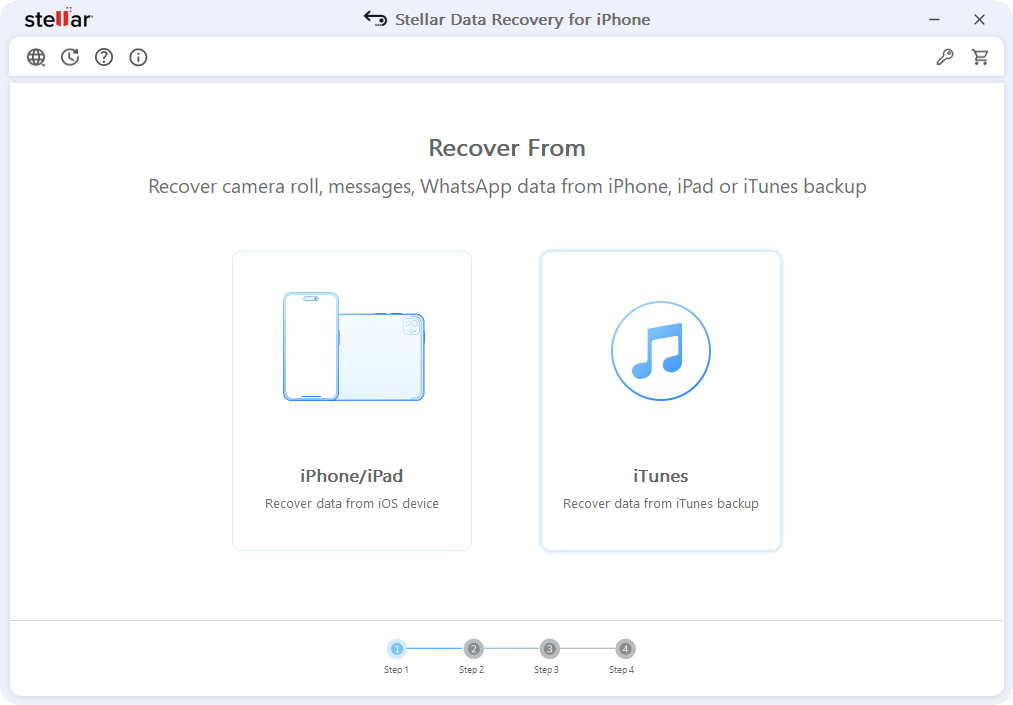
- Open the app and choose “Recover data from iOS device” from the main menu.
- Go to the next page, select contacts & call logs from the list.
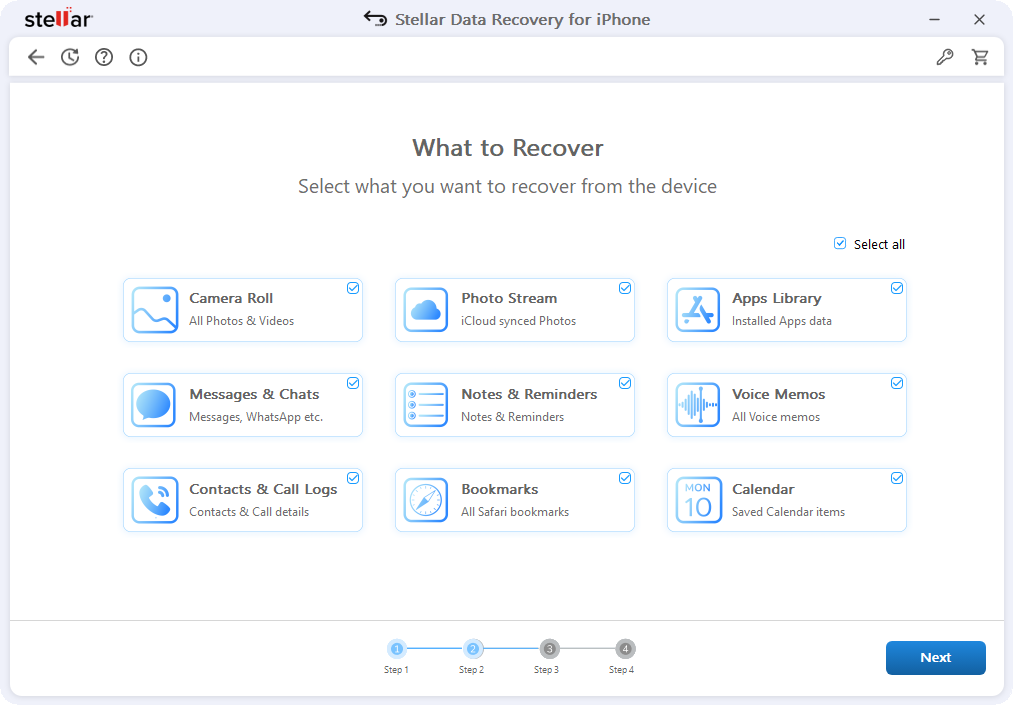
- Connect your iPhone with a USB cable, unlock it, and tap Trust This Computer if it asks.
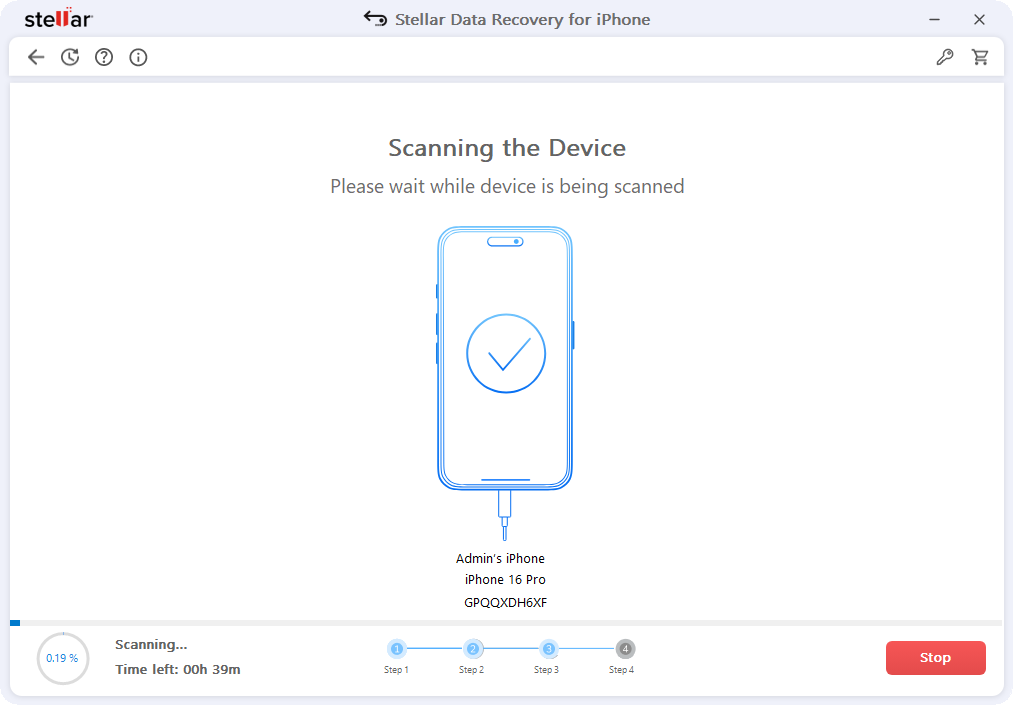
- Click Scan and give it a few minutes to scan your iPhone’s storage.
- Look through the recovered contacts, numbers, and emails in the results.
- Save the deleted contacts on your computer’s storage.
Stellar’s iPhone data recovery tool offers a free trial that lets you recover 10 files (contacts) for free, but you need to upgrade for unlimited recovery. A full scan of a 128GB iPhone took roughly 10 minutes in testing, and it’s the only one that worked when I had zero backup.
Recovery rate depends heavily on how much you’ve used the phone since deleting the contact; scanning within a day or two of deletion recovered nearly everything, while a week-old deletion with normal phone use recovered under half.
If a contact went missing with no backup available, hold off on installing big apps or filming 4K video for now. Because, every new file written to your phone makes it a little harder to recover what was there before.
Follow the best practices to back up iPhone contacts. Turn on overnight iCloud backups, and every so often, connect your phone to plug into iTunes or Finder for a local encrypted backup too, to stay covered if anything goes wrong. Also, whenever you add a new contact log into iCloud.com, select all your contacts, and save them somewhere safe, whether that is your laptop or a cloud drive.
For Apple’s own backup guidance, see Apple Support: Back up your iPhone.
Wrapping Up
If none of the free methods bring your contacts back, no iCloud archive, no usable backup, a dedicated scan tool like Stellar Data Recovery for iPhone can help. It won’t work miracles on a phone that’s been heavily used since the contacts were deleted, but it’s genuinely the only option left in the given scenario, and it doesn’t touch anything else on your device.
Every situation here is a little different, so don’t be afraid to try more than one method. And if something here helped get your contacts back, or if you ran into an issue not covered above, let us know in the comments. It helps us keep this guide accurate as iOS changes.