If you’re facing a black screen upon startup on Windows that displays the message, “Error loading operating system,” it usually means that the PC has found the drive but is failing to start from it. This can happen for a variety of reasons, such as a wrong boot order, corrupted boot information, inactive system partition, and more.
The good news, however, is that you don’t really need to reinstall Windows. You can fix the issue by correcting the boot configuration or repairing the boot information. However, if the drive contains important files, recover them first as some repair steps can modify the disk or boot records.
This guide will cover the “Error loading operating system” issue in detail and share the methods to effectively troubleshoot it on both Windows 10 and 11. You’ll also learn how to recover your files if Windows still won’t boot. Let’s jump in.
Error Loading Operating System: What Does It Mean
Error loading operating system is a boot time error that occurs before Windows boots up. The issue occurs when the computer’s system firmware (BIOS/UEFI) has successfully completed its initial hardware checks but cannot access, read, or process the primary boot files required to start Windows.
Modern Windows systems use UEFI firmware and GPT-partitioned drives, which do not contain the legacy MBR code that generates this message. Instead, comparable boot-stage failure on a modern system appears as a Windows Boot Manager error screen with the error code 0xc000000e or a “No Boot Device Found” warning.
If this specific error appears your computer, it signifies one of three scenarios:
- Legacy system architecture: Your PC is older hardware and uses an MBR partition layout.
- Firmware misconfiguration: The UEFI system has had its settings changed to Legacy/CSM (Compatibility Support Module) mode, which is causing it to look for an MBR structure incorrectly.
- Partition/File system corruption: A sudden power loss, interrupted update, or failing storage drive has corrupted the partition table or boot sectors.
Causes Behind the “Error Loading Operating System” Issue
The error can be triggered because of several reasons, ranging from incorrect boot setting to a problem with the drive itself. The most common ones include:
- Your PC may be trying to start from a USB drive, external disk, or another drive instead of the one containing Windows.
- Changing BIOS settings, updating the BIOS, or resetting the CMOS can modify the boot mode or other settings. A mismatch between Legacy/BIOS and UEFI boot modes can prevent the system from starting correctly.
- A loose or faulty SATA cable, damaged connector, or faulty port can prevent your system from detecting the drive.
- On systems that use an active partition for booting, the required partition may no longer be marked active or the boot process may be pointing to the wrong direction.
- The MBR, boot sector, BCD or other boot-related information may become damaged because of unexpected shutdowns, system crashes, disk errors, or other issues.
- If you recently cloned Windows to another drive, the required system partition may not have been copied correctly.
- File-system corruption or unreadable areas of the drive can interfere with the boot process.
- A drive that is beginning to fail may freeze during access, make unusual noises, or eventually stop responding altogether.
“When a computer won’t boot, the priority should be to protect the data before attempting repairs. Boot-repair commands can modify critical information on the drive, so if the files are important and there’s no backup, recovery should come first.”
Recover Your Data Before Troubleshooting the Error
If the drive contains important files, consider recovering them before attempting boot repairs. Some troubleshooting steps, such as rebuilding boot records or running disk checks, can modify information on the drive. If the underlying problem is a failing drive, repeated attempts to start or repair it can also put additional stress on the hardware.
If Windows won’t boot normally, you can use Stellar Data Recovery Professional to create bootable recovery media on another working computer. Boot the affected PC from this media and scan the internal drive for recoverable files without having to start Windows.
How to Fix the “Error Loading Operating System” Issue?
The fixes below start with the simplest and safest checks and gradually move to more advanced repairs. Start with the basic hardware and boot checks. If the drive is detected and the problem persists, move on to Windows recovery and boot-repair tools. Avoid jumping straight to commands, such as bootrec or CHKDSK, especially if the drive contains important files.
1. Check the Drive Connection
If you’re using a desktop PC and are comfortable opening the case, shut it down completely and disconnect the power. Check that the SATA data and power cables connected to the system drive are firmly seated. If possible, try a different SATA port or cable. For an M.2 SSD, make sure the drive is properly seated in its slot.
Laptop users: Avoid opening the device if you’re not comfortable doing so. Instead, check whether the drive is detected in BIOS/UEFI using the next fix.
2. Disconnect External Storage Devices
Before changing any boot settings or running repair commands, make sure your PC can actually see the drive containing Windows. A USB drive, external hard disk, memory card, or secondary internal drive can sometimes change the boot order or confuse the startup process. A loose or faulty SATA connection can also prevent the system drive from being detected properly.
Leave only the keyboard, mouse, monitor, and the drive containing Windows connected. Turn the PC back on and check whether Windows starts.
If Windows successfully boots it means that one of the disconnected devices was likely being selected as the boot device. Reconnect them one at a time and check the boot order if the problem returns. But if the l error persists, continue to the next step.
3. Check If the Drive is Detected in BIOS/UEFI
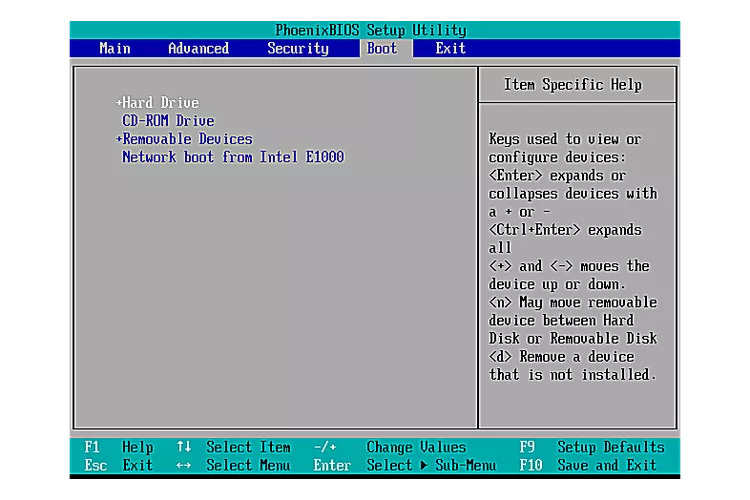
Restart the PC and enter the UEFI Firmware Settings. The key varies by manufacturer, but it is commonly F2, Del, F10, or Esc. Look under sections, such as Storage, Drives, System Information, or Boot and check whether your Windows drive is listed.
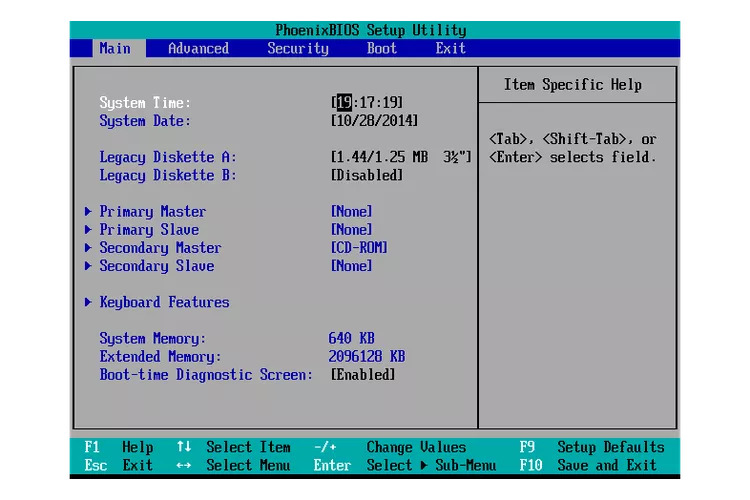
- Drive is detected: The connection is probably not the main issue. Continue to the next fix.
- Drive is not detected: Don’t continue with boot-repair commands yet. A loose connection, failed drive, or hardware problem may be preventing detection. If the drive contains important files, prioritize data recovery before proceeding.
Important: If the drive is making clicking or grinding noises, repeatedly disconnecting, freezing the computer, or disappearing from BIOS/UEFI, avoid repeated restart attempts and disk-repair operations. These can make a failing drive more difficult to recover from.
If the drive is detected normally, the next step is to make sure the PC is trying to boot from the correct drive and using the appropriate boot mode.
4. Check the Boot Order and Boot Mode
If your drive is detected but the “Error loading operating system” message still appears, the PC may be trying to boot from the wrong device or using a boot mode that doesn’t match the way Windows was installed.
To check the boot order:
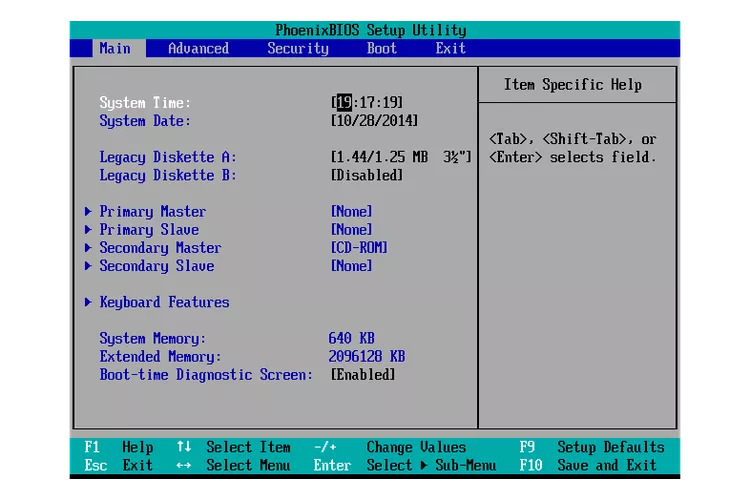
- Navigate to the Boot section in BIOS.
- Make sure your internal HDD/SSD is selected as the first boot option.
- Save the changes and restart the PC to see if the issue is resolved.
To check the boot mode:
- Look for a setting, such as Boot Mode, UEFI/Legacy Boot, or CSM in BIOS/UEFI.
If Windows was installed in UEFI mode, the system should normally be configured to boot using UEFI. If it was installed using Legacy BIOS, switching to UEFI without properly configuring the installation can prevent Windows from booting.
If the error appeared after changing BIOS settings, resetting the CMOS, cloning the drive, or moving Windows to another drive, a boot-mode mismatch is particularly worth checking.
Important: Don’t switch between UEFI and Legacy/CSM at random. The correct setting depends on how Windows and the drive are configured. If you’re unsure, leave the setting unchanged and move to the next fix rather than risking additional boot problems.
5. Reset BIOS Settings
If the boot order and boot mode are correct but Windows still won’t start, a changed BIOS setting could be preventing the system from accessing the drive correctly. This is especially worth checking if the problem started after a BIOS update, CMOS reset, or manual BIOS change.
- Restart your PC.
- Enter BIOS by pressing the F2, F8 or DEL key, depending on your motherboard manufacturer.
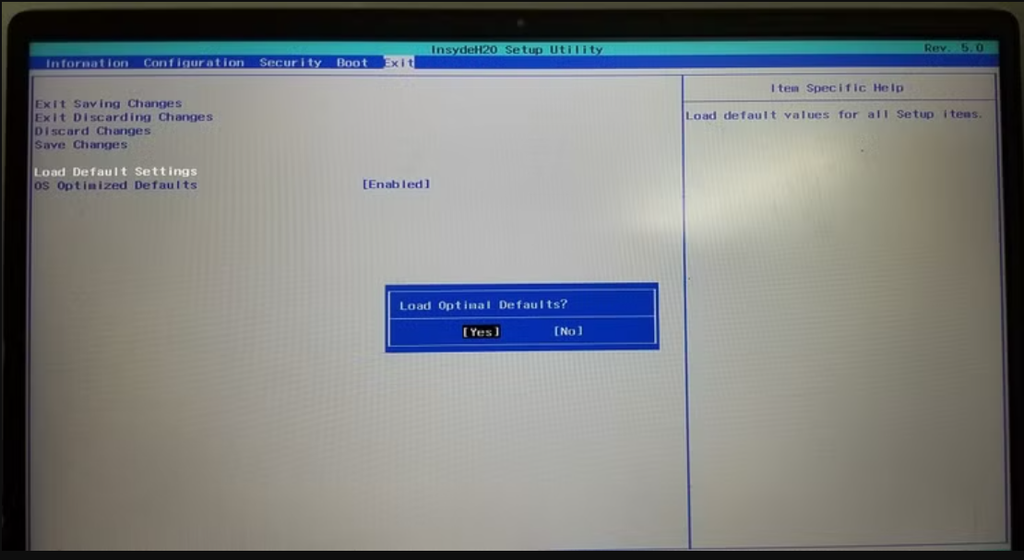
- Use the arrow keys to select Load Default Settings and press Enter.
- A Load Optimal Defaults window appears, select Yes to set the default BIOS settings.
- Lastly, press F10 and Enter to save the changes and exit.
6. Run Startup Repair
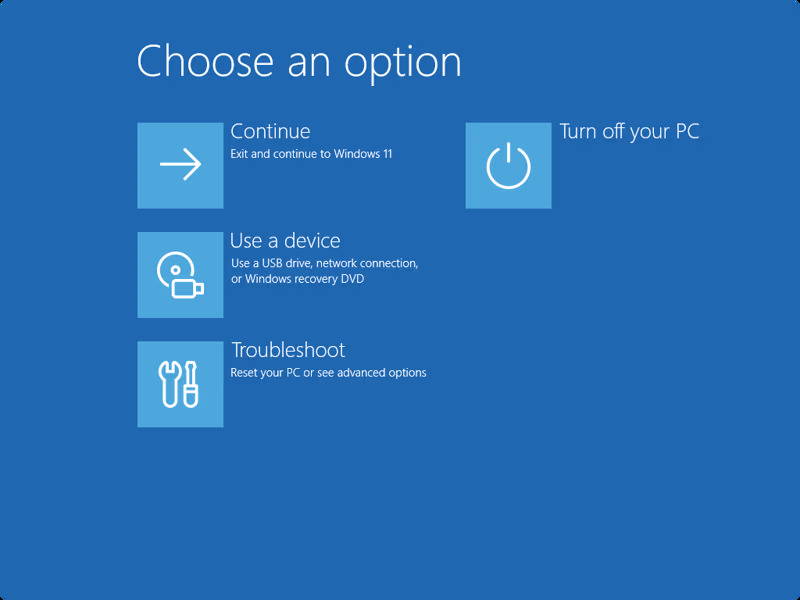
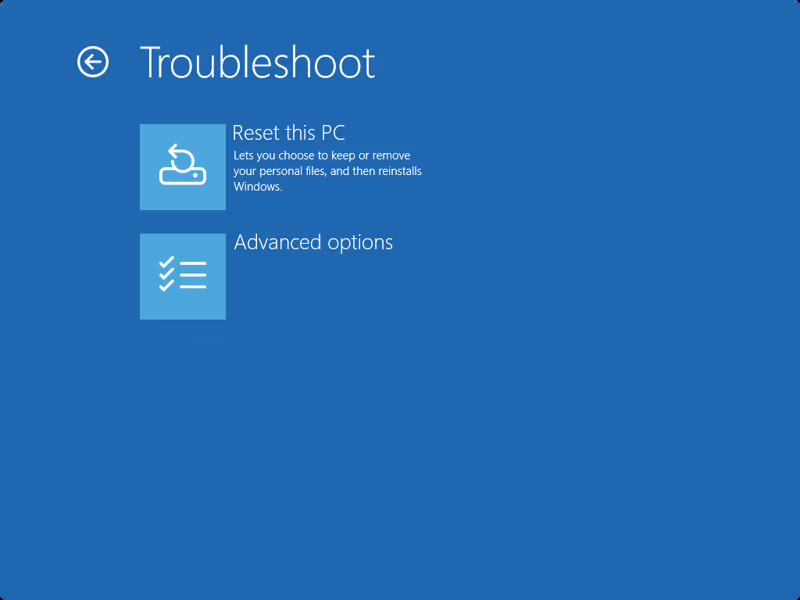
If the BIOS settings are correct but Windows still won’t start, try Startup Repair. This Windows recovery tool can automatically detect and repair certain problems that prevent Windows from booting. Because you can’t reach Windows normally, you’ll need to access the Windows Recovery Environment (WinRE).
- Enter WinRE.
- Click Troubleshoot.
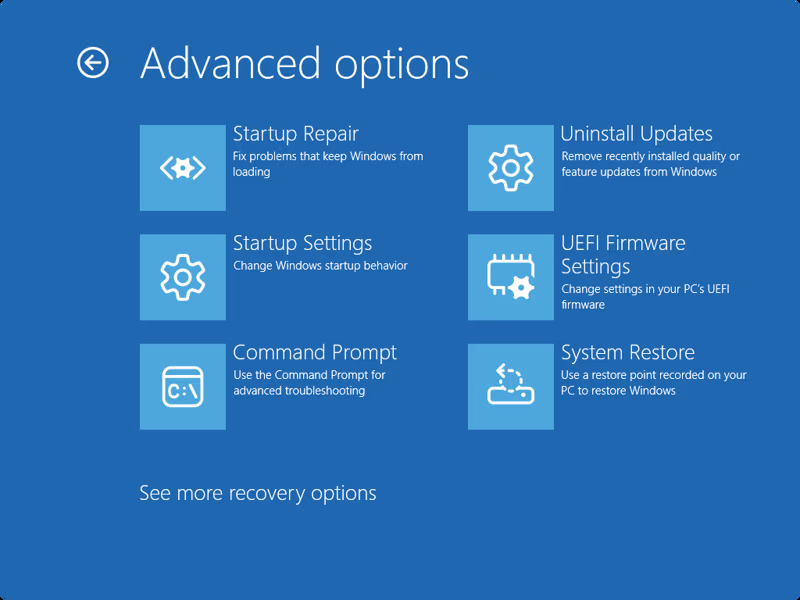
- When the process finishes, restart the PC and check if Windows loads.
7. Repair Boot Records and Boot Configuration
If the drive is detected, the boot settings are correct, and Startup Repair hasn’t resolved the problem, the boot information itself may be damaged. The Master Boot Record is an important part of your drive that helps initiate the boot process. When it becomes corrupted due to malware, disk errors, or improper shutdowns, your PC may fail to locate the operating system.
- Enter WinRE.
- Click Troubleshoot.
- Click Advanced options.
- Select Command Prompt.
- Execute the following command one after another:
bootrec /fixmbr
bootrec /fixboot
- Next, scan for Windows installation by running the following command:
bootrec /scanos
- If the Windows installation is detected, rebuild the Boot Configuration Data (BCD):
bootrec /rebuildbcd
- Restart your PC and see if the issue is resolved
8. Set the System Partition as Active (MBR Disks)
On MBR disk, On MBR disks, the boot code looks for the partition marked as active and starts Windows from there. If the active flag is cleared or sits on the wrong partition, the PC can’t find the boot files and may show the “Error loading operating system” message even though Windows is intact. You can set the flag again using DiskPart.
- Enter WinRE.
- Click Troubleshoot.
- Click Advanced options.
- Select Command Prompt.
- Run the following commands one after another:
diskpart
list disk
select disk 0
list partition
select partition 1
active
exit
Replace the 0 and 1 with the numbers of your system disk and partition, which you can identify by size. The system partition is usually a small one (typically 100–500 MB). If the disk has no such partition, select the one that contains Windows. Then restart the PC and check if Windows loads.
Important: The active command works only on MBR disks. If DiskPart says the selected disk isn’t a fixed MBR disk, the drive uses GPT, so skip this fix. DiskPart also doesn’t check what the partition contains, so marking the wrong one as active can leave the PC unable to start. For details, see Microsoft’s active command reference.
9. Run CHKDSK
If repairing the boot configuration didn’t fix the “Error loading operating system” message, the drive may have file-system errors that are preventing Windows from reading required files. You can run CHKDSK from the Windows Recovery Environment (WinRE) to check the file system and repair certain errors.
Note: If the drive holds files you haven’t backed up, recover them before running CHKDSK. It writes repairs directly to the file system, and those changes can’t be undone. If the drive is failing, the scan itself can put additional stress on it.
- Enter WinRE.
- Click Troubleshoot.
- Click Advanced options.
- Select Command Prompt.
- Run the following command:
chkdsk X: /f
Replace X with the correct drive letter for your Windows partition. Restart the PC after the scan completes and check if Windows loads.
The /f switch fixes file-system errors but doesn’t scan for bad sectors. The /r switch does: it locates bad sectors, recovers readable data, and includes the /f repairs, but it reads the entire drive and takes much longer. Don’t use /r on a drive that is clicking, freezing, or dropping out of BIOS/UEFI; recover your data first. For the full list of switches, see Microsoft’s chkdsk reference.
10. Reset Your PC
If you’ve checked the hardware, corrected the boot configuration, repaired the boot records, and ruled out drive problems but Windows still won’t start, the Windows installation itself may be too damaged to repair. At this point, you can reset your PC as a last resort.
Note: Don’t use either option until you’ve made sure your important files are backed up or recovered.
- Enter WinRE.
- Click Troubleshoot.
- You’ll typically see options to:
Keep my files: Reinstalls Windows while attempting to preserve personal files.
Remove everything: Removes personal files, apps, and settings and reinstalls Windows.
If you choose Keep my files, remember that it is not a substitute for a backup. If the drive has underlying hardware problems or Windows cannot access the file system properly, your files may still be at risk.
How to Prevent “Error Loading Operating System” in the Future
You can’t prevent every boot failure, but a few habits can reduce the risk and make recovery easier if something goes wrong again.
- Maintain at least one current backup of important files on an external drive or another reliable storage location.
- Avoid changing BIOS settings unnecessarily. In case you do need to change the boot mode, SATA mode, or other firmware settings, note the original configuration first. An incorrect setting can prevent an otherwise healthy Windows installation from booting.
- Regularly check the S.M.A.R.T status and other health indicators of your HDD or SSD.
- After cloning Windows to another drive, verify that the required partitions were copied and that the new drive uses the appropriate boot configuration before relying on it as your primary system drive.
- Avoid forced shutdowns and power interruptions whenever possible.
Summing Up
The “Error loading operating system” message usually points to a problem with the boot process, not necessarily a lost Windows installation or permanently lost data. Start with simple checks, such as the drive connection, boot order, and boot mode, then move to Startup Repair and boot or file-system repairs, if needed.
If the drive shows signs of failure or contains important files that aren’t backed up, recover your data before running repair commands or reinstalling Windows. Once your files are safe, work through the fixes in order and use a reset or clean Windows installation only as a last resort.
FAQs