The error Unrecognized database format in MS Access occurs when opening ACCDB/MDB files, using VBA/DAO code (like the ‘OpenDatabase’ method), or working with an Access database file stored on a shared network drive. Accompanied with Error Code 3343, it makes your database inaccessible and often prevents you from opening specific tables or forms linked to them.
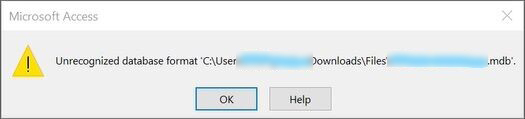
The error usually appears when the application fails to read the file format due to version mismatches (such as opening a newer version in an older program), database corruption, or a damaged frxque32.mdb file. The error usually appears with the following messages:
- Unrecognized database format.
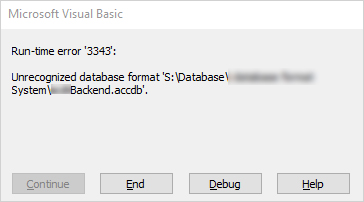
- Run-Time Error 3343: Unrecognized database format.
- Error 3343: Unrecognized database format.
User Queries
Several Access users have reported encountering the MS Access error “Unrecognized database format” (Error 3343) on different forums. Some examples are:
Query 1: I have been using Base to run queries against an MS Access 2007 database (.accdb) on XP. Moving to Windows 7 Pro SP1 and having problems connecting to the .accdb and getting the error “unrecognized database format.” I have read this thread and done everything there (I believe!) but still encountering the above error message. Any help is much appreciated.
Query 2: I received the error “Unrecognized Database Format ‘S:\DB-BE.accdb'” while using the front end of a split database. Can anyone help me to fix the error?
Query 3: I’ve posted about the same issues several months ago. Apparently, there was a well-known bug causing MS Access users to receive an “Unrecognized Database Format” error while they are entering data.
Query 4: I was using my database just fine. Then, all of a sudden, I was not able to enter anything through a form due to an error. So I closed the Access application and opened it again. Now, whenever I try to open any table or a form linked to a table, I get the error “Unrecognized database format S:\XXX\XXX\xxx.accdb.” |
You can get this error when opening the Access database file of a latest version in an older version. However, there could be several other reasons that can lead to this error, such as:
- Corrupted MS Access database.
- Corrupted frxque32.mdb file.
- Microsoft Office is not updated.
- Microsoft FRx using corrupted jet databases.
- Microsoft Access jet engine incompatibility.
- Bad sectors on the system hard drive where the MS Access file is stored.
- Hardware or software issues.
- Database is stored on network share and multiple users are using it simultaneously.
- Corrupted split database (frontend or backend).
- Lack of required permissions on the shared network drive where the database is stored.
To resolve this error, first restart the Access application and check the database folder for lock (.laccdb or .ldb) file. Access automatically creates this temporary file, when a database opens, to manage multi-user access, and normally deletes it upon closing. If the file is not deleted after closing the application, it may block the database from opening properly. So, you have to manually delete it. If the error persists, move the database to a new folder on the same drive to resolve network sync conflicts or permission issues. If these workarounds didn’t work for you, then follow these methods.
Method 1: Check and Convert the MS Access Database Format
The error “unrecognized database format” means that the Microsoft Access application fails to read the database file. It often occurs due to incompatible database format. For example, when you try to open an older version (Access 2003 or earlier) database file (mdb) in a higher version (Access 2010 or later). To resolve this, you can convert the older version file (.mdb) into a newer one (.accdb). Follow the steps below:
- In Microsoft Access, click on the File option and then click Open.
- Click Browse to select the Access 2000 or Access 2002-2003 database file (.mdb) you want to convert.
- Click File and then click on the Save As option.
- Click Save Database As.
- Select the database file type and then select Save As.
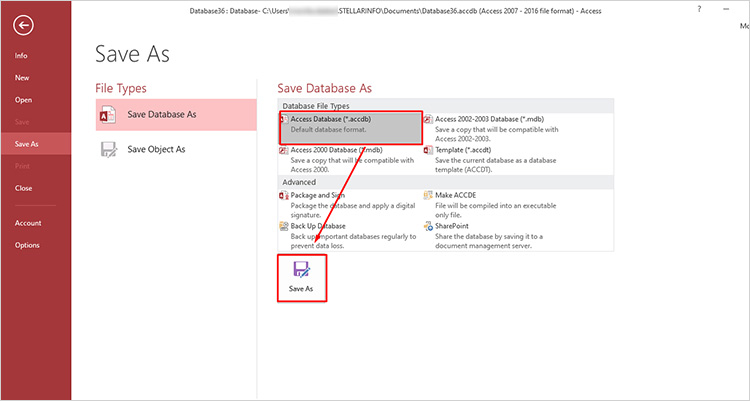
- In the Save As dialog box, enter a name in the File Name field and click Save.
Now, try to open the database file and see if the error is resolved.
Method 2: Reset the frxque32.mdb File
Note: This fix is only applicable for older, legacy versions of the Access file (like FRx 6.7).
The Run-time error ‘3343’: Unrecognized database format may occur when launching the Queue Monitor (FRx Designer), starting the Report Server, or when queuing reports in Access. This usually happens if there is a damaged or corrupted frxque32.mdb file, which is a component of the FRx SysData Directory required for launching FRx applications. The error can also occur when launching FRx Designer, if there is an issue with the QueDirectory settings.
To resolve this, you can rename the FRx SysData directory to reset the corrupted frxque32.mdb file. If the problem is not resolved, then check and reconfigure QueDirectory Settings in SYSTEM.CFG.
Method 3: Uninstall /Rollback Recent Windows Updates
The “unrecognized database format” error can occur due to issues with Office updates or Windows updates. If you are facing this error after installing Office updates, you can try reverting back to Office’s earlier version. If there are issues with the Windows updates, you can roll back the problematic updates by following these steps:
- On your system, click the Start option.
- Select Settings and click Update & Security.
- Go to Windows Update > View update history > Uninstall updates.
- Find the Update, right-click on it, and then select Uninstall.
Method 4: Use the ‘DisableLeasing’ Registry Hack
You may encounter this Access database error when running VBA code that uses Data Access Objects (DAO). It usually appears when you are trying to open a database file stored on network file share and multiple users are accessing the file simultaneously. To fix this, Microsoft recommends disabling file leasing on the server or system where the shared (back-end) database files are saved. Here are the steps to do so:
Note: Before applying this fix, make sure you have administrator rights on the system to apply the registry hack.
- Click on the Windows Search box and type Command Prompt.
- Right-click on Command Prompt and click Run as administrator.
- Next, copy and paste the following commands in the CMD window:
REG ADD HKEY_LOCAL_MACHINE\SYSTEM\CurrentControlSet\Services\lanmanserver\parameters /v DisableLeasing /t REG_DWORD /d 1 /f
NET STOP SERVER
NET START SERVER
- Press the Enter key.
- Close the Command Prompt.
Now, try opening your database from the network share again to verify that the error is resolved. If it still fails to open, you should move on to the next method.
Method 5: Select the Missing References and ADO Library
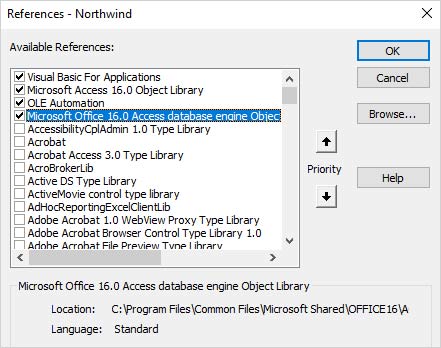
The run-time error 3343 can also occur due to missing, outdated, or broken ADO (ActiveX Data Objects) library reference. Without the required object library, Access cannot read data types or compile VBA code. To fix this, follow these steps:
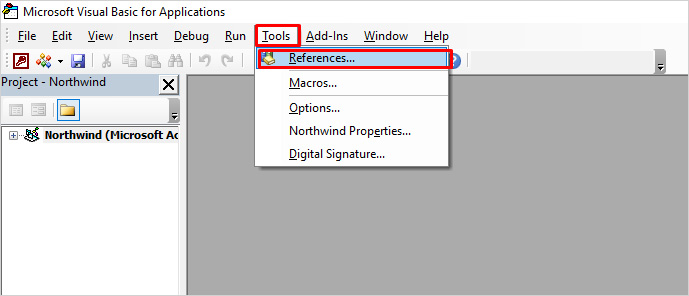
- Open the VBA window (press Alt + F11).
- Go to Tools > References.
Method 6: Repair your Access Database
The unrecognized database format error can also occur if the database (.ACCDB/.MDB) file is corrupted or damaged. You can try the Microsoft Access’ built-in utility, Compact and Repair, to repair the file. Here’s how to use this utility if the file is not opening:
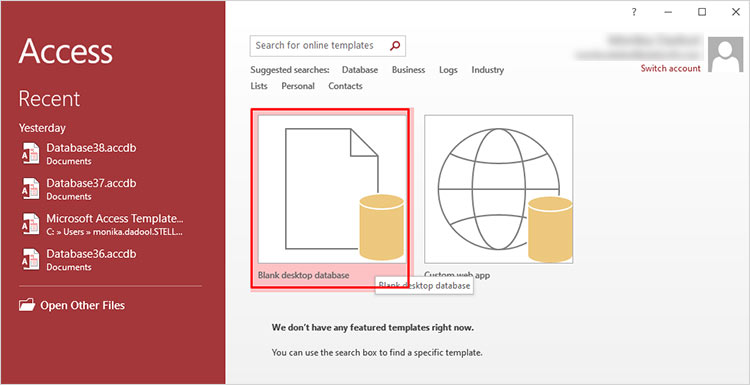
- In your Access application, double-click on Blank desktop database. This will open a blank Access database screen.
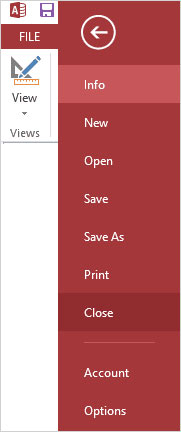
- Click on File. On the screen that appears, click Close.
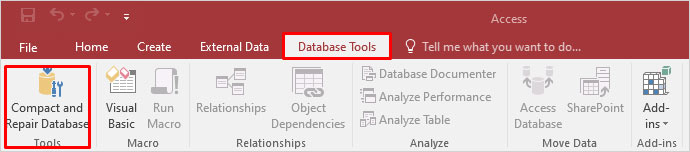
- From the toolbar, click Database Tools and then select Compact and Repair Database.
- A ‘Database to Compact From’ dialog box opens. Browse and select the problematic database file that needs to be compacted and repaired. Click Compact.
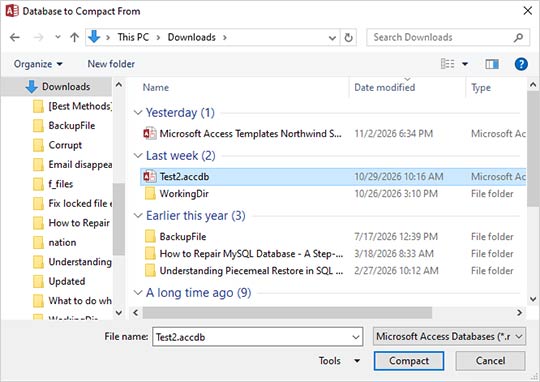
A copy of the compacted and repaired file will get saved at the exact location where your original database is stored. Sometimes, the tool fails to repair the database file and again displays the same error.
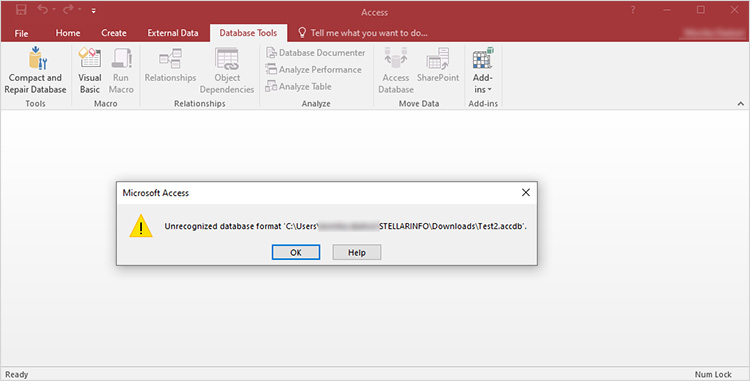
In this case, you can use the Compact and Repair tool with command-line switch to resolve corruption in the Access database without opening it. For this, open a Command Prompt window and execute the below commands in the same sequence:
"C:\Program Files\Microsoft Office\Office16\MSACCESS.EXE" "C:\Users\monika.dadool.STELLARINFO\Documents\ Test2.accdb" /compact
If it fails to repair the database and displays the same unrecognized format error, it means the database file is severely corrupted. In such a case, you can restore the backup database (if available).
If the Compact and Repair tool fails to open or repair the database and backup is not available, you can use a professional Access repair tool, such as Stellar Repair for Access. It can quickly and easily repair highly corrupted .accdb and .mdb files and restore all data with complete integrity. The tool also resolves complex corruption-related errors, including the “unrecognized database format” error.
Watch this video to learn how it repairs Access database that fails to open.
If you have a small database file of up to 50 MB, you can repair it for free by using Stellar’s Online Access Repair service. It can repair an MDB or ACCDB file without the Access application or installing any additional software. For larger files up to 2 GB, you can use the service’s premium version.
Conclusion
The “Microsoft Access unrecognized database format error” may appear while upgrading the system or opening a file through applications like Visual Studio. It occurs when the application fails to recognize the file. You can follow the methods discussed above to fix this error. If Access fails to read the database due to corruption, you can use Stellar Repair for Access. It is a reliable Access repair tool that can help you repair ACCDB/MDB files of any size in just a few simple steps.
FAQs