There are two ways to compact and repair Microsoft Access database without opening it – using the Blank Desktop Database option in the Access application or run the tool directly via command-line switch. Below, we will explaining these methods with stepwise instructions. If the compact and repair process fails or if the Access application cannot open, you can rely on a professional Access repair tool to recover the database.
When you Need to Repair Access Database?
You may need to repair an Access database without opening it, if it is severely corrupted, too large to open, or shows errors like:
- Microsoft Access has detected corruption in this file
- Database needs to be repaired or isn’t a database file
- Error 3049: Cannot open database.
- MS Access unrecognized database format error
What is Compact and Repair Utility in Microsoft Access?
It is a native built-in utility in MS Access to repair corrupted or damaged Access database files.
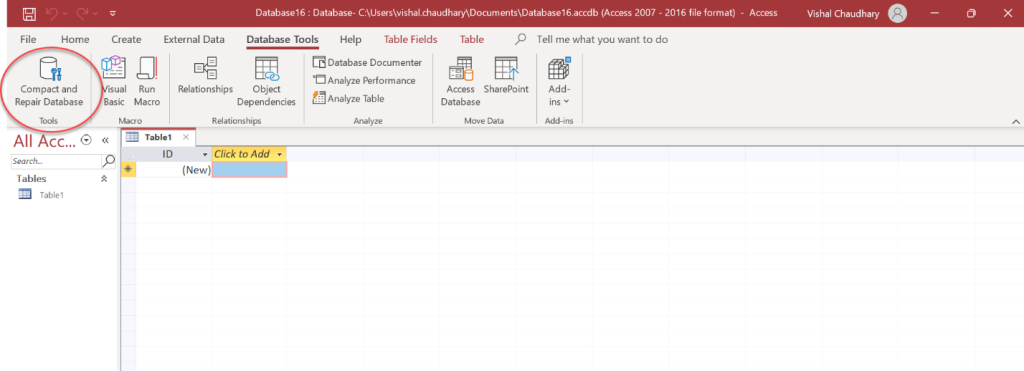
This utility helps you to:
- Remove unused space from deleted records and reduce the file size.
- Rebuild the database file regardless of its size.
- Resolve minor corruption in Access database files.
- Improve Access database performance by reducing its size.
Following are some actions you should take before initiating this operation:
Take backup of Corrupted Database:
The Compact and Repair tool may remove damaged data from the database file while repairing. Therefore, it is highly recommended to take a backup before using this tool.
The Database should not be in Use by any Other User:
This utility requires exclusive access to the database. Make sure the database on which you’re planning to run the compact and repair is not in use by another user.
Check for Permissions:
Make sure you have the necessary permissions to compact and repair the Access database file. If the database is shared over a network, confirm that you have permissions on the network drive. If you don’t, get assistance from your system administrator.
How to Compact and Repair Access Database without Opening?
If you’re not able to open the Access database, then follow the below-mentioned methods to compact and repair it.
Method 1 – Using Blank Desktop Database Option in MS Access
To compact and repair a database without opening, follow these steps:
- Open your Access application.
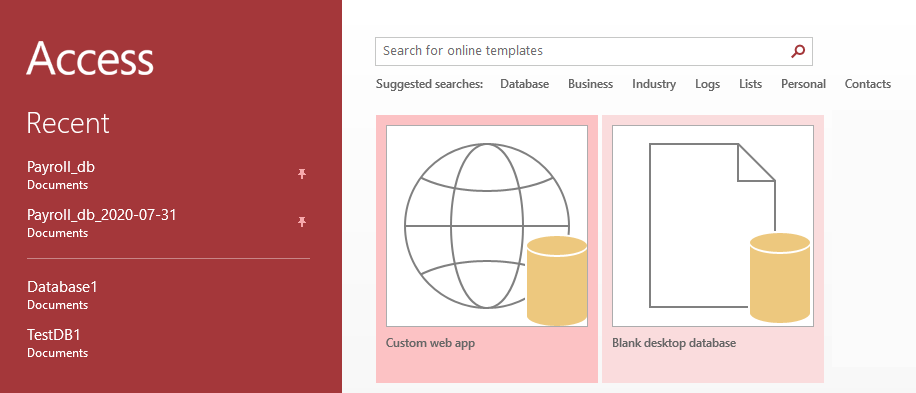
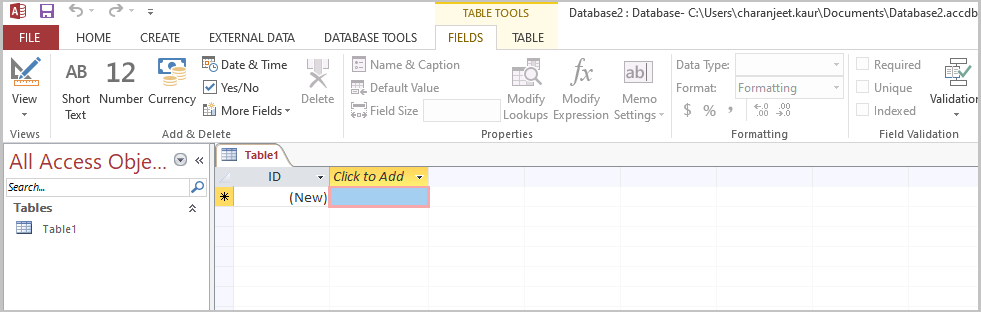
- Double-click on Blank desktop database. This will open a blank Access database screen.
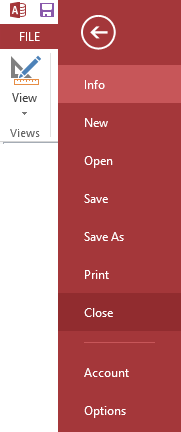
- Click on File. In the screen that appears, click Close.
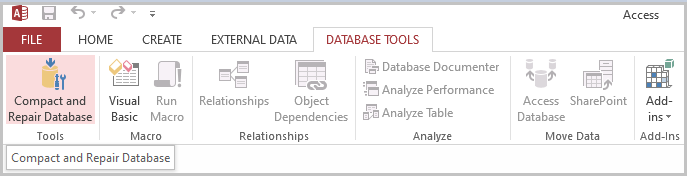
- Click Database Tools from the toolbar and then select Compact and Repair Database from the Tools section.
- A ‘Database to Compact From’ dialog box opens. In this dialog box, browse and select the database that needs to be compacted and repaired. Click Compact.
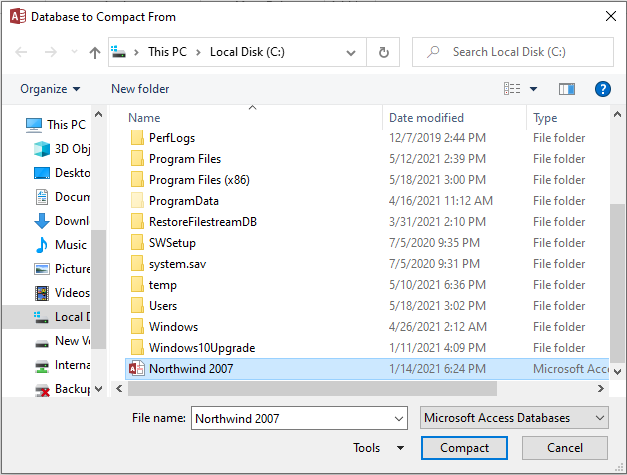
A copy of the compacted and repaired file will get saved at the exact location where your original database is stored.
Method 2 – Using Command Line Switch
If your Access database is not opening, you can try running the Microsoft Access ‘Compact and Repair’ utility by using command-line switch. Here’s how:
- Open a Command Prompt window and execute the below commands in the same sequence:
"C:\Program Files\Microsoft Office\Office16\MSACCESS.EXE" "C:\Users\monika.dadool.STELLARINFO\Documents\Database24.accdb" /compact "C:\Users\monika.dadool.STELLARINFO\Documents\Database24_compacted.accdb"
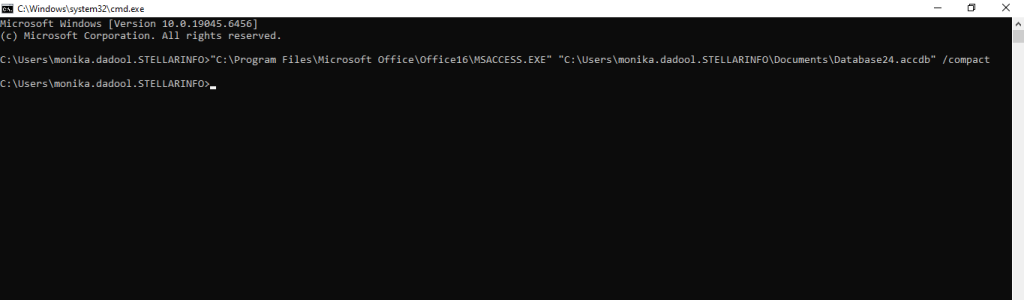
Note: In the above commands, replace the path with your application installation and database file path. Also, replace the database name with your database name.
What If the Compact and Repair Utility Fails to Repair the Database?
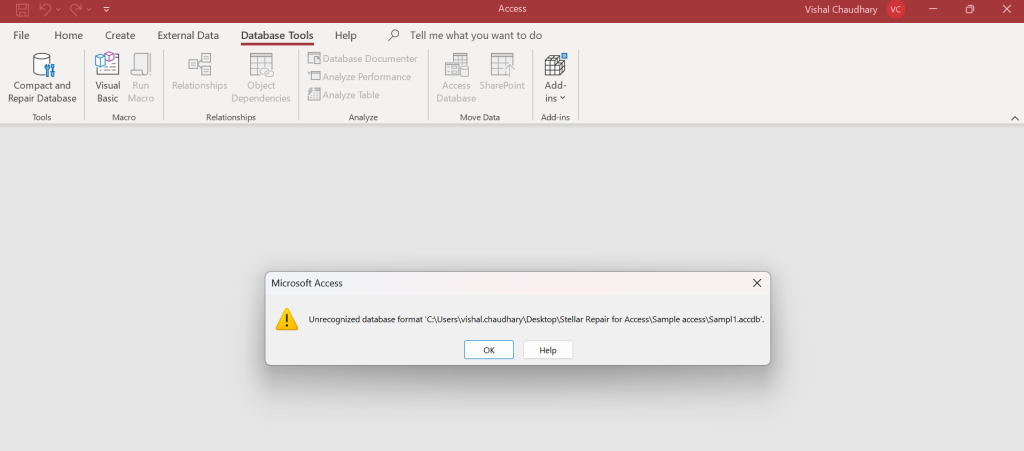
Caption: Compact and Repair Database failed to fix a corrupted .ACCDB file, displaying the error message: “Unrecognized database format.”
If the built-in Compact and Repair utility is not working or fails to fix your corrupt or damaged Access database, you can try the following methods:
1 – Import Access Data into a New Database
You can try importing data from the corrupted database into a new one to recover corrupt Access database. Follow the below-cited steps::
- In your MS Access application, click the External Data option.
- Then, select the Import Access Database option.
- In the Get External Data – Access Database window, select the option labelled “Import tables, forms, reports, macros, and modules into the current database.”
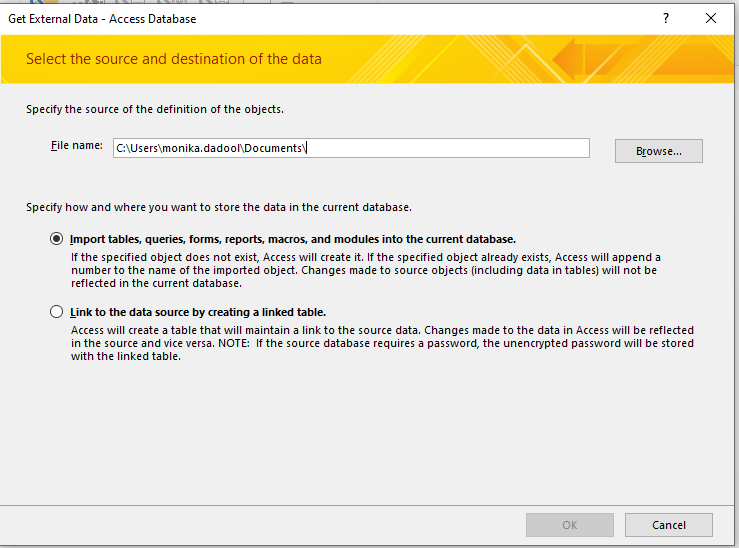
- Select the objects from the database that you want to import into the new database and then click OK.
This will import all the selected objects from the affected database into the new database file.
Note: This method may not work if the Access database file is severely corrupted.
2 – Use a Professional Access Database Repair Tool
If the Compact and Repair utility fails to repair the database or the file is severely corrupted, then use an advanced Access database repair tool. Stellar Repair for Access is one such tool that can repair severely corrupted ACCDB or MDB files without data loss. It can recover all the objects, including reports, indexes, tables, queries, etc. Also, the tool supports repairing split databases.
Here are some benefits of the software you should know about:
- Comes to the rescue when native tools “Compact and Repair Database” fails to fix a severely corrupt Access database file.
- Help DBAs fix the problem of “Unrecognized database formats”
- Resolves database is in inconsistent state (Error code 9505)
- Repairs corrupt database files of MS Access version Office 365, 2019, 2016, 2013, 2010, 2007, and lower.
- Recovers relationships and data between linked tables in MS Access.
- Previews the repairable data before saving it.
Steps to Repair Corrupt Access Database using Stellar Repair for Access Software
We will demonstrate fixing “Unrecognized database format” error which Compact and Repair Database failed to fix.
Test Case: File name Sampl1 à .ACCDB format having 1.27 GB file size.

Problem Statement à severe corruption à native tools unable to repair the file.

- Run the Stellar Repair for Access software. The software’s main interface with a ‘Select Database’ dialog box will open. Use the Browse option to select the corrupt Access database file and then click Repair to begin the repairing process.
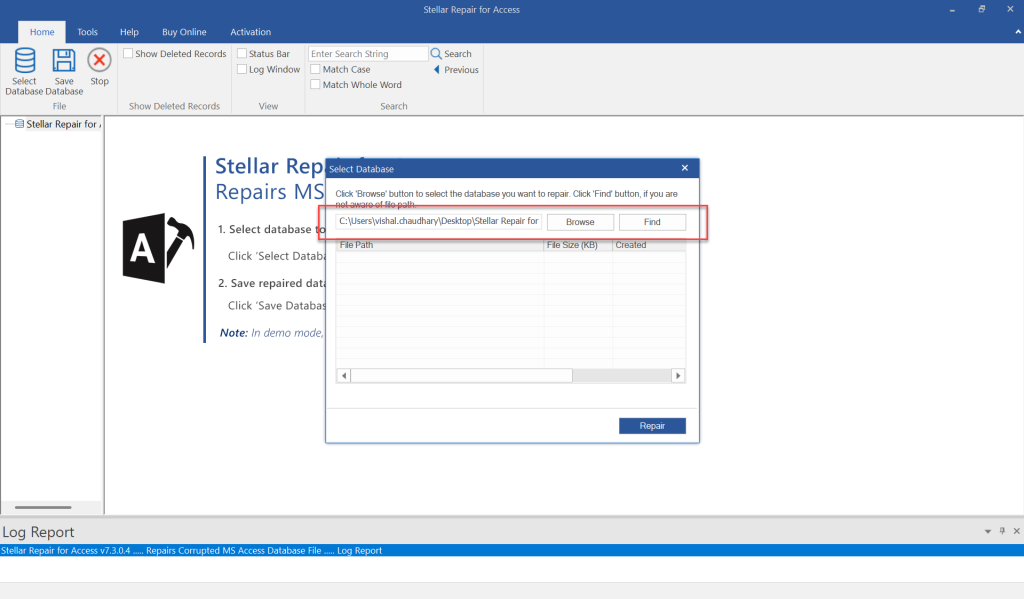
Note: Use the Find button to find the file if you’re not aware of its location. The process of searching a database file across all the subfolders might take some time to complete.
The corrupt Access database file is under repairing process. Recommended not to stop the process in-between.
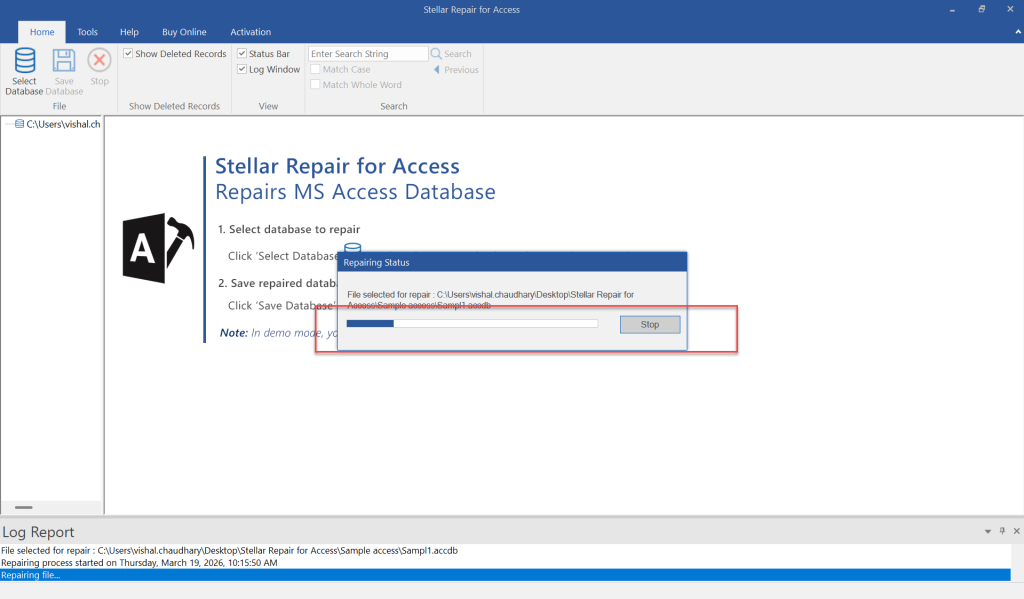
- Hit the OK button when the ‘Repairing Complete’ message box pops up.
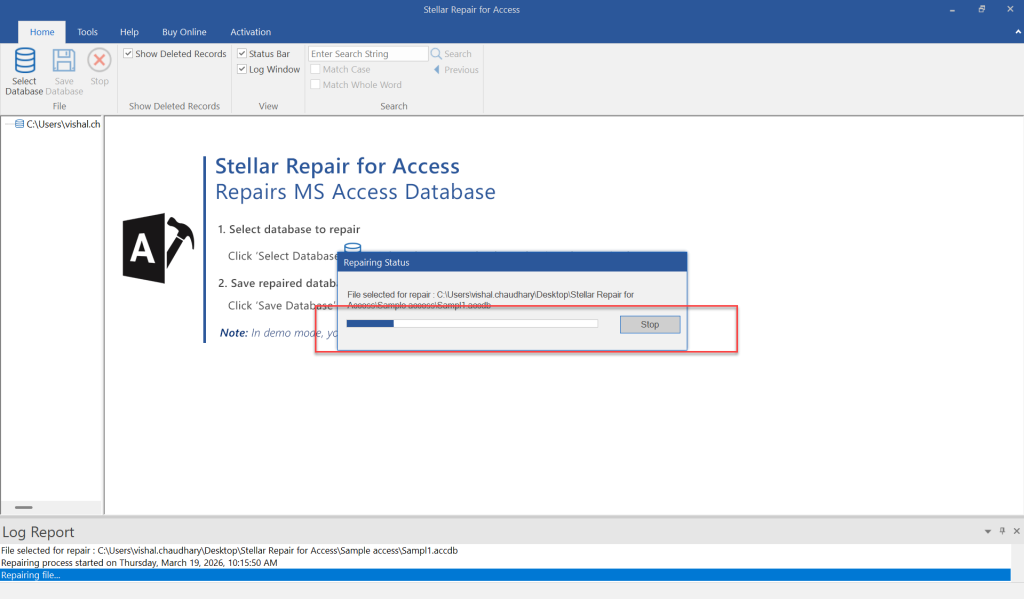
- All the repairable objects, such as tables, queries, forms, etc., will be displayed in a tree-view structure in the left pane. Expanding the objects will show all the repairable child objects.
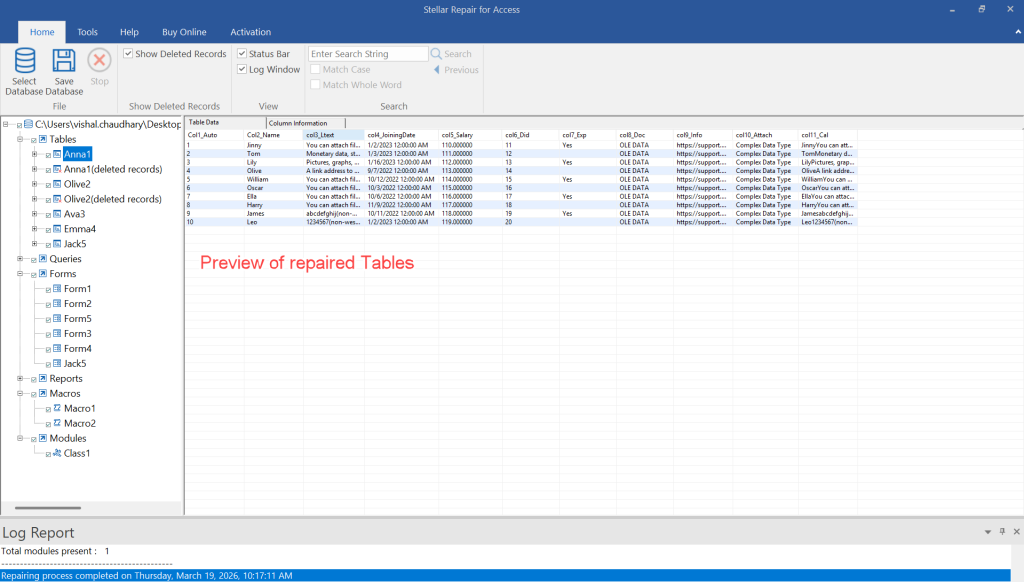
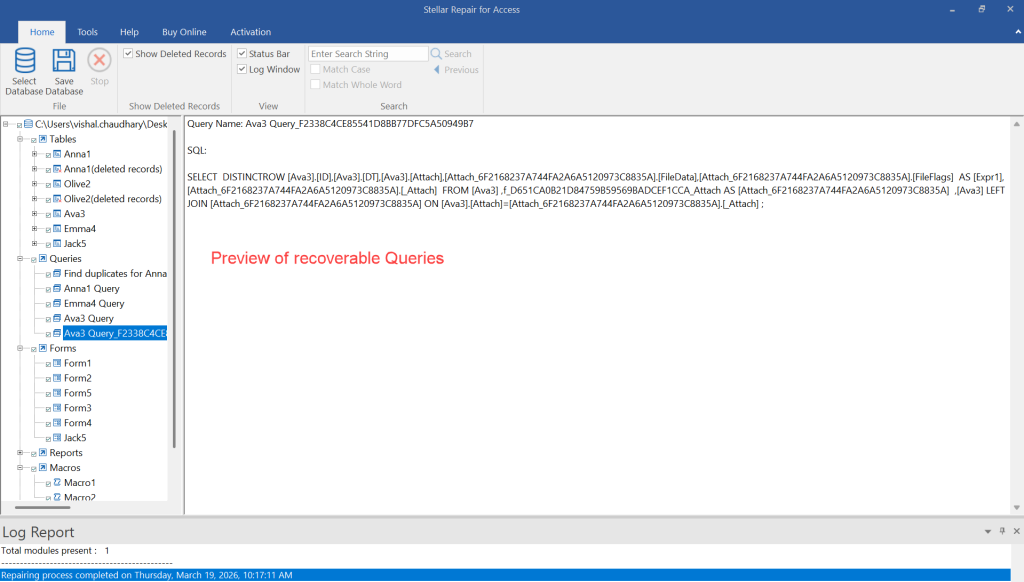
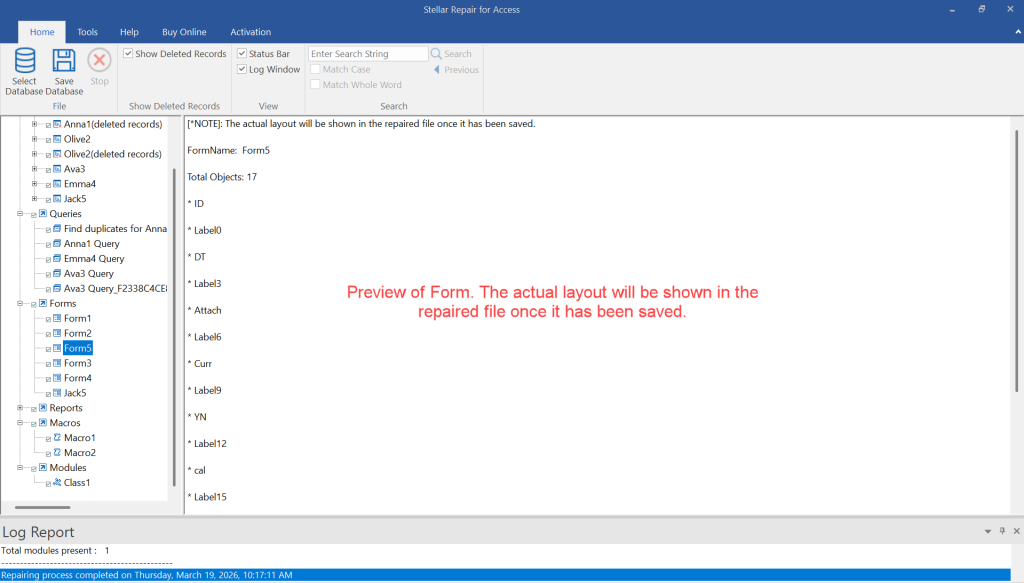
- Now check the results in the preview, then click Save Database.
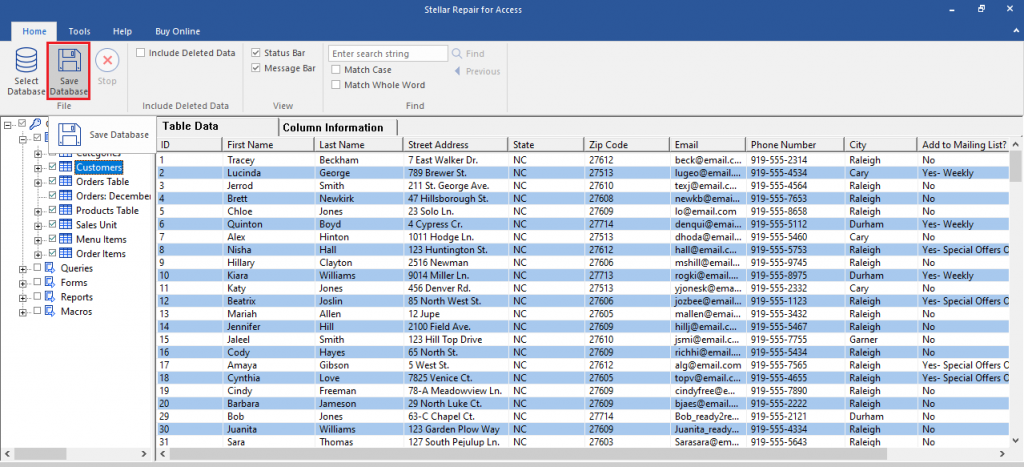
- Choose either a default location or a new folder to save the file.
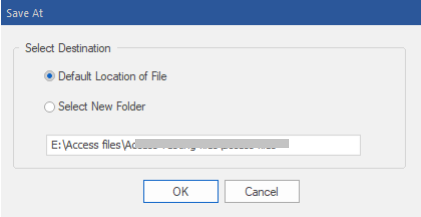
- You will get the following message on completion of the repair process.
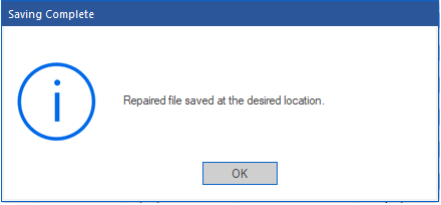
Go to the location where the repaired Access database file is saved and start using it in your MS Access application.
Watch this video to know the complete process to repair database using the software:
You can take the help of a professional Access repair tool when,
- The Compact and Repair utility fails to recover database files.
- The database is severely corrupted.
- The Access application does not open.
- The utility runs but fails to restore all objects from corrupt ACCDB files.
- You need to repair or recover Access data quickly and without data loss.
Conclusion
The MS Access built-in ‘Compact and Repair’ tool helps in reducing database file size and repairing the corrupted file. If you are unable to repair the database with this Access utility, you can follow the alternative methods mentioned in this guide. The best option is to use Stellar Repair for MS Access an advanced Access database repair tool. It can help you repair the Access database files with 100% data integrity.