


Forensic Photo Recovery: Recover Deleted Photos for Investigation
May 25, 2026| 9 min read



Summary: We tested 15 video recovery tools across 4 real-world SD card file deletion scenarios. Based on those tests - the best video recovery software in 2026 are Stellar Photo Recovery, EaseUS, Disk Drill, and Recoverit. All these tools outperform competitors in video file format support, data handling, deep scan recovery, after-sales support, and successfully recovering files even from corrupted storage devices. If you have deleted videos that look like they are permanently gone, this guide will show you exactly how to get them back.
Free Download 100% Secure Free Download 100% SecureWhen we think about data loss, we usually picture hard drive crashes. While hardware crashes remain the leading cause of data loss on PCs and laptops, accounting for 67% incidents, recent survey data shows that human error such as accidental deletion - accounts for over 14% of all data loss cases.
Video files, because of their sheer size - are often a massive chunk in our storage drives and are the hardest to fully recover after permanent deletion without the right tool in hand. However, video recovery software plays an important role in retrieving these deleted files, be it - MP4, MOV, FLV, WMV, or any other format.
But, deciding which video recovery software to choose still remains the hardest part - that’s because there are 100s of video recovery tools. All of them claim file recovery in every other situation - but do they really recover your deleted video files? A user cannot test every tool to find out this fact - and that’s where we come into the picture.
Before that, let’s begin by explaining to you the test setup.
Disclaimer: These video recovery software tests were conducted under expert supervision from our R&D labs - we recommend not to imitate these tests at home because there’s a high risk of data loss or storage drive corruption.
The test mimicked a real-world workflow where we used SD card and a Nikon D7500 DSLR camera to shoot some video files, we inserted the SD cards into a Windows PC renamed the files and checked these video files for any corruption issues - then we added some more MP4 files under 100 MB in size. Next, we added some large video files and movie file formats. The same process was replicated across 4 identical 16GB SD cards.
The test was conducted in 4 different levels, including 4 different SD cards.
For all these test scenarios we used a Windows 11 computer.
SD Card 1 - All the saved video files on this SD card were deleted, and then the recovery software provided below was used to scan the SD card and recover them.
SD Card 2 - All the saved video files on this SD card were deleted, and additionally, the SD card was quick formatted using the FAT32 file system.
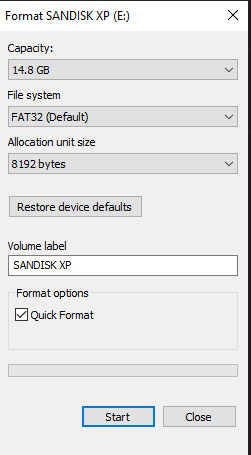
SD Card 3 - SD card video files were deleted, and we ran a quick format. After that, we added new video files to this SD card to test the software’s capabilities.
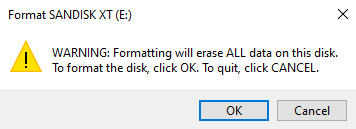
SD Card 4 - After saving the video files as part of our test setup. Following the operating system guidelines provided by the SD Association for storage capacities of 32GB or smaller. The car was formatted using the FAT32 file system. A full format.
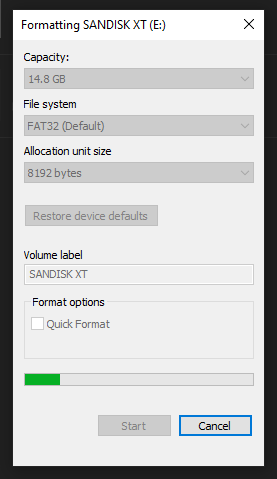
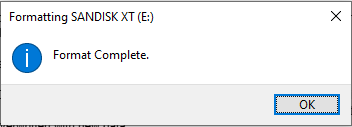
The screenshot below is proof of fully formatting the SD card.
| Software | Level 1 Accidental Deletion | Level 2 (Deletion + Quick Format) | Level 3 (Quick Format + Add new files) | Level 4 ( Full Format) |
| Recuva | Passed | Failed | Failed | Failed |
| Stellar Photo Recovery | Passed | Passed | Passed | Failed |
| Disk Drill | Passed | Passed | Passed | Failed |
| Rescue PRO | Failed | Failed | Failed | Failed |
| Wise Data Recovery | Passed | Passed | Partial Recovery | Failed |
| EaseUS | Passed | Passed | Passed | Failed |
| Recoverit | Passed | Passed | Passed | Failed |
| TenorShare 4Ddig | Passed | Passed | Partial Recovery | Failed |
| R Photo | Passed | Passed | Partial Recovery | Failed |
| Disk Genius | Passed | Failed | Failed | Failed |
| iMyFone D Back | Passed | Failed | Failed | Failed |
| AnyRecover | Passed | Passed | Failed | Failed |
| DMDE | Passed | Passed | Partial Recovery | Failed |
| Remo Recover | Passed | Failed | Failed | Failed |
| PhotoRec | Passed | Passed | Partial Recovery | Failed |
On Windows Vista and above - Full format is a kill switch for your data as it wipes the data stored in your external storage drive. Technically, no standard data recovery software can recover data from an external storage drive that has undergone a full format as it overwrites the data with zeros.
Whereas in a quick format scenario the data is still intact and can often be fully recovered. The test was conducted to validate the point and aware users, not to defame or put down any tool or its real capabilities.
I’ll quickly answer - why we performed these benchmarks using external storage or specifically SD cards, rather than a computer’s internal SSD or HDD. There are three critical technical reasons for this:
Most modern internal SSDs use a feature called TRIM. This feature almost instantly wipes the deleted data on a storage drive. This can limit the window for software-based recovery, making it almost impossible to recover the files for any recovery tool.
Internal drives are constantly writing background data (logs, cache, temp files). This temporary data can overwrite deleted video files with prolonged usage of the device.
Statistically, most video loss cases happen from SD Cards or external drives - specifically from camera cards. Testing on SD cards replicates the most common data recovery scenario.
SD cards allow us to switch between FAT32, exFAT, and NTFS. This allowed us to test how recovery tools handle different file systems after a "Quick" vs. "Full" format.
Internal HDD or SSDs are huge and they constantly write background data - making it difficult to tell how files can be lost. By using 16GB SD cards, we could calculate the exact percentage of the drive that gets overwritten with new data.
Running so many data recovery software can cause storage drive errors and other device errors. An SD card is an isolated environment, so if a test leads to a fatal device error - we only lose a $10 card, not a $150 internal NVMe SSD containing the lab’s OS and tools.
SD cards have much simpler controllers as they exclude any internal OS. Thus, giving us a clean look at how each software interacts with the raw storage sectors.
Our lab test benchmarks made the picture quite clear and helped us differentiate between basic recovery tools and specialized data recovery software.
The above table does show the - Passed and Failed data, allowing users to make swift decision-making for video recovery tools - but wait, there’s more to this. We aren't stopping just at the pass/ fail criteria.
Because a tool might pass a test but take an hour to do it, or have an old-fashioned dashboard that you’d rather not use.
To give you the full picture, we looked at the "human" side of these tools: this includes installation experience, actual recovery speeds, file compatibility, a list of features, and whether they offer free recovery support. Moreover, it will help you to decide which tools are actually helpful and which are just plain marketing.
The list below is curated professionally - with the end customer in mind. Because, in a crowd of 20 tools, they won't all excel - but these four definitely did. They outperformed the competitors in almost all aspects and handled the benchmark pressure better than the rest.
Quick Verdict:
Stellar Photo Recovery is a dedicated video and photo recovery tool, and in our tests, it delivered the best recovery among all. It gets the most comprehensive video format support, and a clean, interactive dashboard that guides you through recovery without requiring any technical knowledge. If you need to recover deleted videos for free (10 videos/100MB each) and you want the best chance of success, this is one of the tools to use.
Installation and UI experience:
Installation is straightforward and takes under one minute. The installer is a standard .exe on Windows or .dmg on Mac. This tool comes with no bundled adware, browser extensions, or unwanted software despite offering free download.
The interface presents a three-step workflow - select the type of media you lost (in this case, videos), select the drive or device to scan, and click 'Scan.' The tool offers both a quick scan and a deep scan option, though in my testing, I preferred the deep scan for anything beyond simple accidental deletion. That’s because it surfaces significantly more recoverable files, especially from SD cards and formatted drives.
Stellar’s scan speed was fastest - quick scan took a couple of seconds - while deep scan took around 45 seconds on a 16 GB SD card. This time depends mostly on the card size, and data stored in it as a 128GB SD card may take 5 to 7 mins. If your storage drive or device is bigger - such as 1TB - it may take some time - but the tool’s pause and resume scan feature - allows you to save the scan results for re-starting the scan next time.
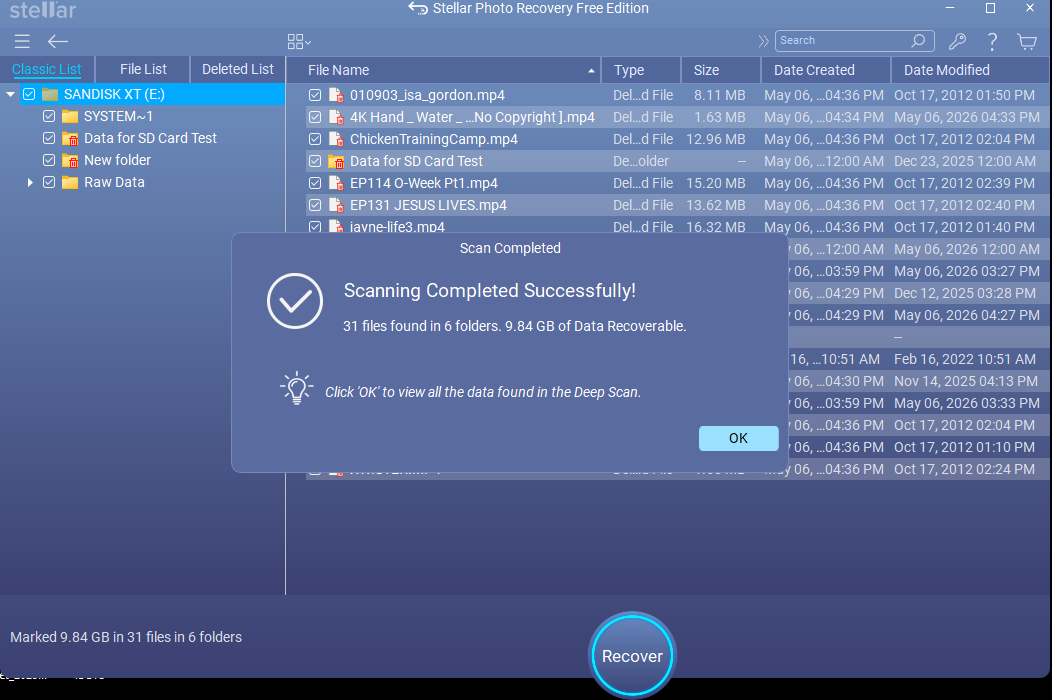
The scan results were thorough - in our deleted video test scenario (15 video files across 3 formats deleted and then scanned), Stellar recovered all of them in fully playable condition even after files were deleted, the card was quick formatted, and new video files were added to the SD card to mimic a real-world extreme deletion scenario.
Stellar's preview panel allows you to play back a short preview clip of recovered video files directly within the interface, before recovering them. The only limiting factor is that the free version allows previews for up to 10MB files.
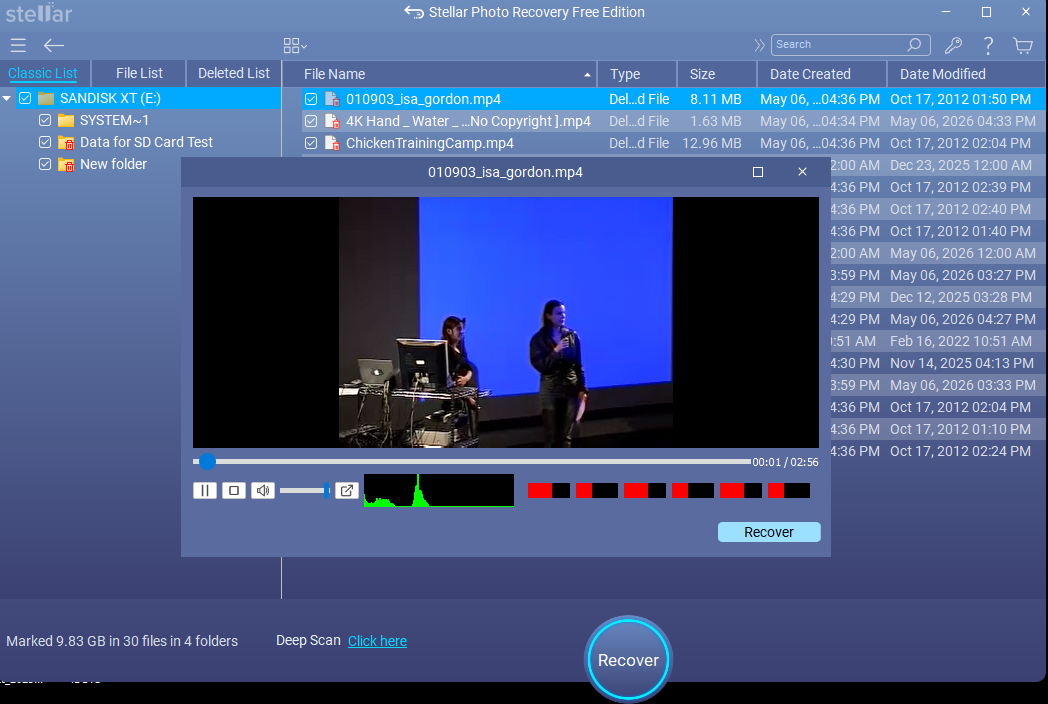
The tool supports recovery of almost all video file formats, including: MP4, MOV, AVI, MKV, MPEG, MPG, M4V, WMV, FLV, 3GP, 3G2, and others. In our tests the tool successfully listed 10 MP4 and MOV files, as well as three large MKV files exceeding 1 GB each. The most distinguishable feature of this tool is that you can actually add a custom file format for recovery support.
That feature extends coverage for almost all video formats. However, you will hardly use this feature as by default it supports most formats - used in Apple ProRes workflows and Sony/Canon professional cinema cameras.
In terms of storage device compatibility, Stellar supports recovery from internal HDDs and SSDs, all type of external USB drives (up to 18TB). This includes SD cards, microSD cards, CompactFlash cards, and USB flash drives.
The tool supports recovery from drives with FAT32, exFAT, NTFS, and APFS file systems.
Pros and Cons:
| PROS | CONS |
| Supports all video file formats, including professional codecs | In the free version - no preview is available for files larger than 10 MB |
| Clean, beginner-friendly interface | No Linux version available |
| Available for both Windows and Mac | Free version only recovers 10 files of up to 100MB size - Upgrade for unlimited recovery |
| Free trial with full scan + preview |
|
| 30-day money-back guarantee |
|
| Supports drives up to 18TB |
|
Pricing: $49.99/year
Stellar pricing strategy remains the most aggressive among all - it only charges $49.99/year (Get a lifetime license at just $89.99) for the standard version license, whereas the Professional version costs up to $59.99/year.
Quick Verdict:
EaseUS Data Recovery is a great DIY data recovery tool on the market, combining an exceptionally clean step-by-step interface with a 91% recovery rate and one of the most generous free tiers available, offering 2GB of free data recovery without requiring a license.
Installation and UI Experience
The installation experience is polished - the installer is clean, no adware or bundled software, and the interface loads immediately after installation without requiring a restart. The UI design is arguably the cleanest in the category - a simple three-panel layout guides you through device selection, scan initiation, and file recovery clearly labeled buttons.
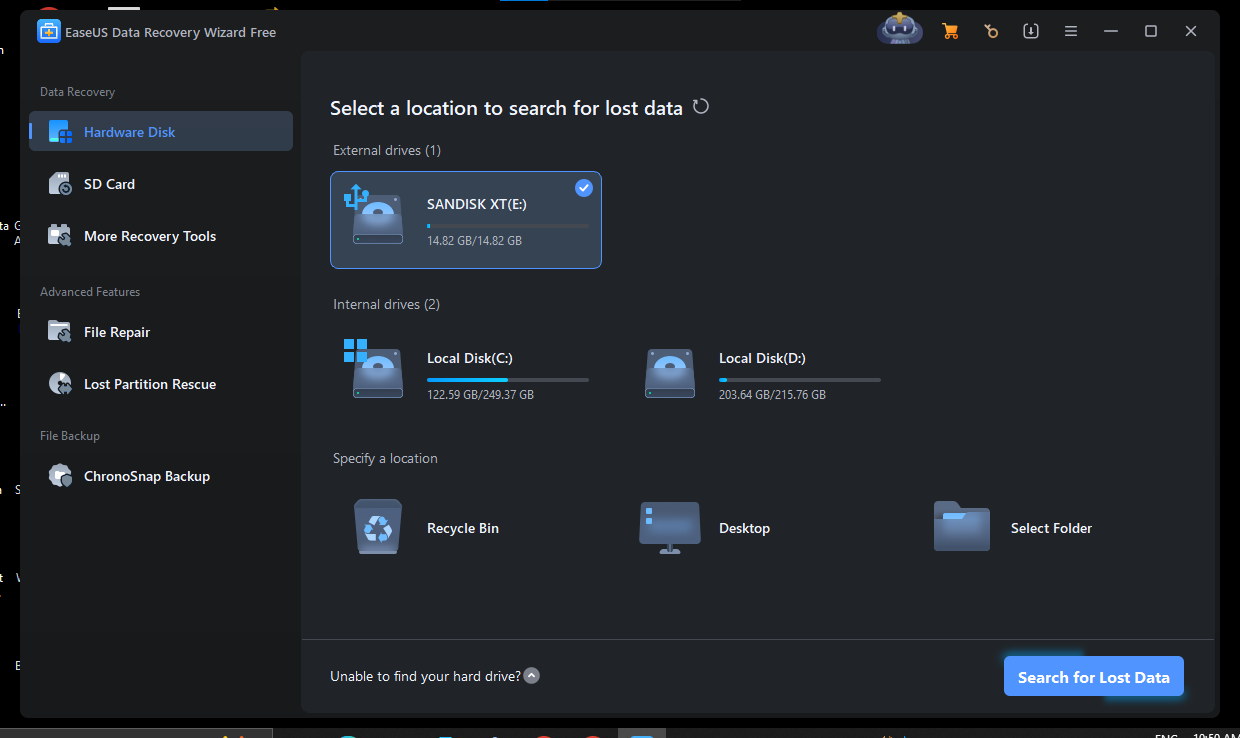
For a first-time user who has never run recovery software before, EaseUS is the tool most likely to result in a successful recovery without any external help or documentation.
In my testing, EaseUS completed a deep scan of a 16GB SD card in approximately 2 minutes - slightly slower than Stellar but within an acceptable range. The recovery rate for video files in our standard deletion scenario was commendable for fully playable files, which places it solidly in second place behind Stellar. The only drawback was that some video files were listed multiple times with different names - making it difficult for us to find the original one.
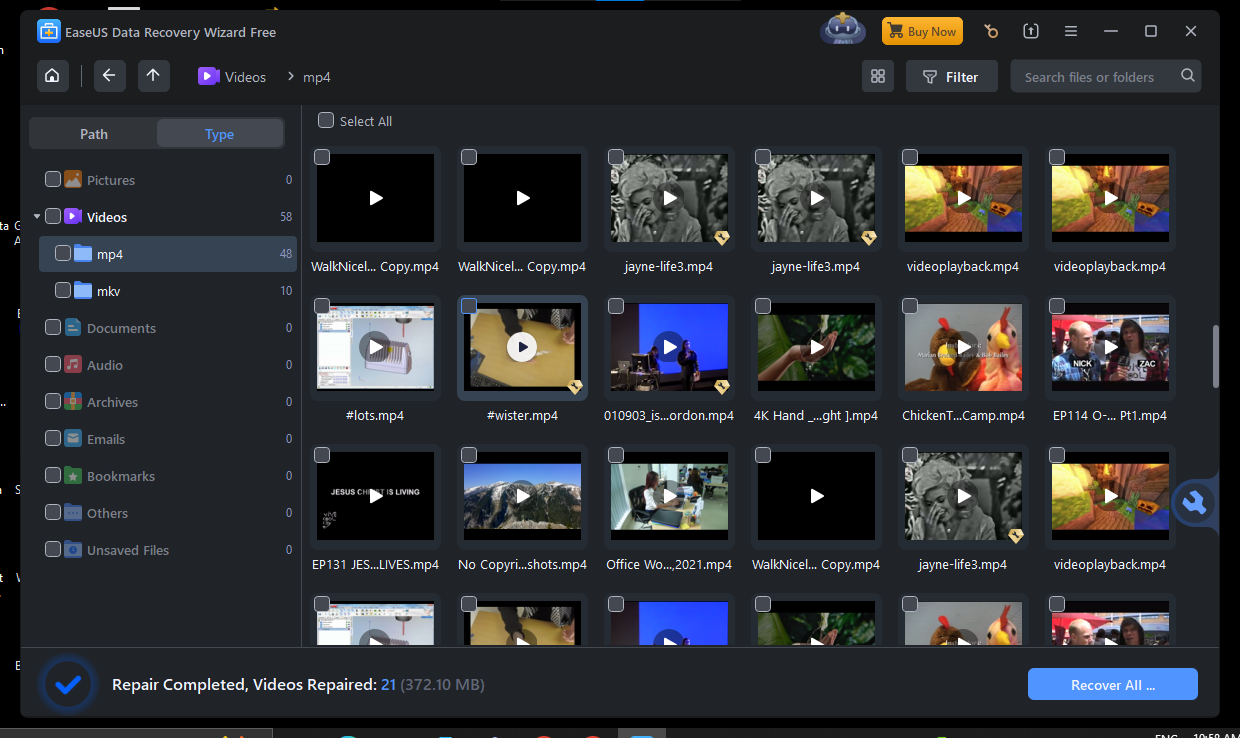
EaseUS performed particularly well on recently deleted MP4 and MOV files, recovering all test files in those formats with no playback issues. It did show a slight slowness with formats like MKV.
The free 2GB recovery tier is a genuine differentiator. While many tools offer only 100MB or 1GB or just preview for free, EaseUS actually allows you to recover up to 2GB of data - that’s enough for several short video clips or 1 big video file.
This makes EaseUS a good option for users who have a small amount of footage to recover and want to avoid spending money if possible. For larger recovery jobs, a paid license is required, but the pricing structure is notably higher compared to competitors like Stellar.
One area where EaseUS stands out is the preview feature. It plays almost any video file irrespective of the file size and in its full quality. This allows you to check if the video file is damaged or corrupt before recovering it. This is a meaningful advantage over tools that do not offer the preview feature - especially for users dealing with video file corruption from mid-transfer disconnections or storage device failures.

EaseUS supports almost all identical video file types. It covers MP4, MOV, AVI, MKV, MPEG, WMV, FLV, 3GP, M4V, ASF, RM, RMVB, DAT, VOB, M2TS, MTS, and AVCHD, etc.
Pros and Cons:
| PROS | CONS |
| 2GB free recovery without license | Monthly pricing is expensive ($69.95/mo) |
| Best beginner interface in the category | Slightly slower scan speed than Stellar |
| AI-enhanced video repair for corrupted files | Weaker on professional codecs (ProRes, MXF) |
| Better than satisfactory recovery rate in testing | Customer support response times can be slow |
| Available for Windows and Mac |
|
| Supports 1,000+ file types |
|
Pricing: $69.95/month
EaseUS Data Recovery charges $69.95 per month for a subscription license, compared to Stellar Photo Recovery annual standard package of $49.99 per year, EaseUS is 10x more expensive. But if you look deeply EaseUS is designed to recover all types of files - whereas Stellar’s Photo Recovery tool only offers - video, photo and audio recovery support.
Quick Verdict:
Disk Drill is a yet another easy to use recovery tool and offers 100MB of data recovery without a license - that allow recovery of only a few short video clip. The tool comes combined with a genuinely well-designed interface and recovery rate in our tests. Forget the free limit - and its performance takes the lead among others. It also reflected a strong recovery performance on MP4 and MOV files and recovered files from FAT32-quick formatted SD cards.
Installation and UI Experience
Installation was easy and quick, and it took less than 1 minute in both our Windows and Mac systems. In our testing, Disk Drill's deep scan took about 4 minutes on the 16GB SD card - slightly slower than the top tools but acceptable. We realized that Disk Drill's scan engine is better optimized for basic deletion recovery than for complex corruption scenarios.
Many users suggest about its Disk Health monitoring capability, which runs alongside the recovery workflow and provides S.M.A.R.T. data analysis on connected drives. This feature is hidden behind a paywall and available for users who upgrade. This integration is a thoughtful design choice that adds genuine value, particularly for users dealing with drives that may have underlying hardware issues causing the data loss.
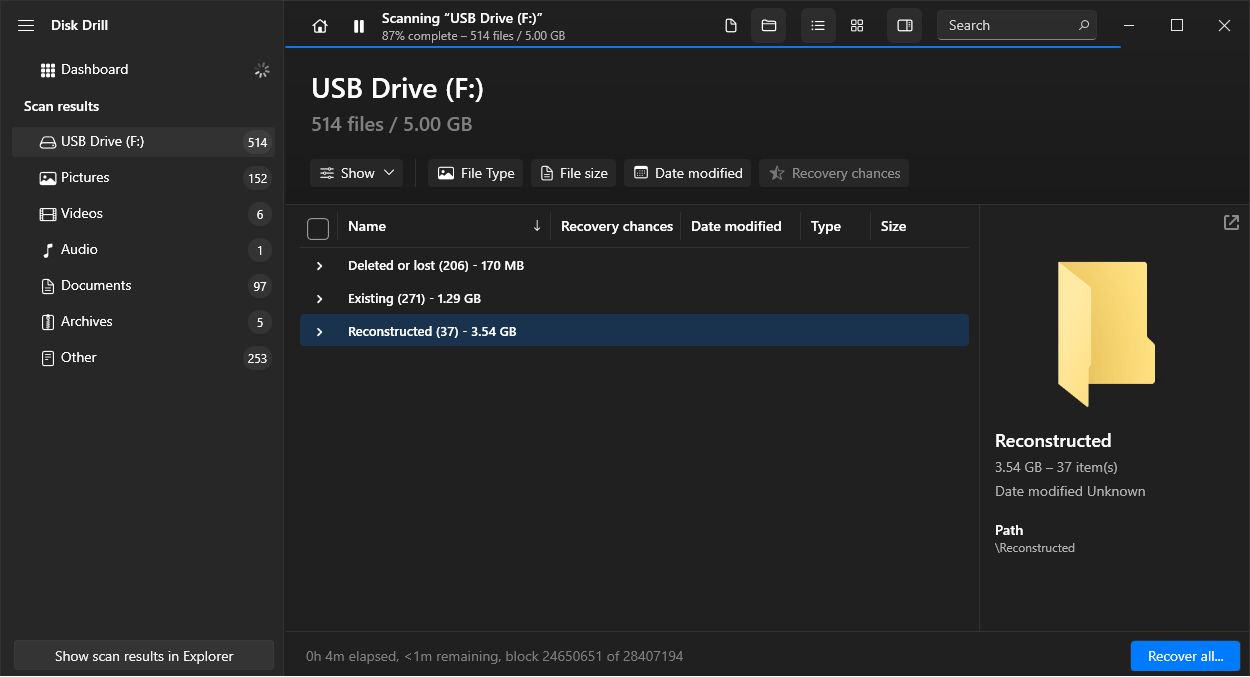
The most appealing feature was how the software listed everything - every type of file - every file - every format. It looked like a clean slate that required minimal search to find the desired files after recovery.
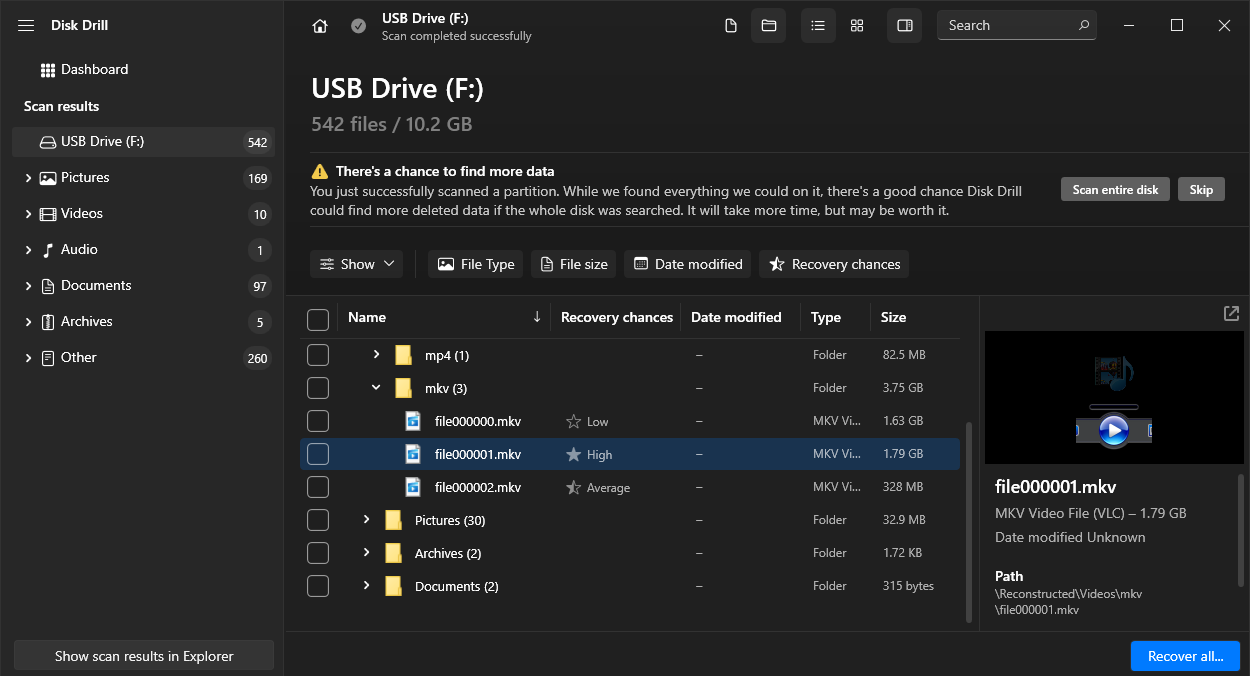
The preview feature of the software is also a major highlight - no matter how large your video file is, it previews anything and everything. We felt it was many times better than others - infact you could actually watch an entire movie without recovering that.
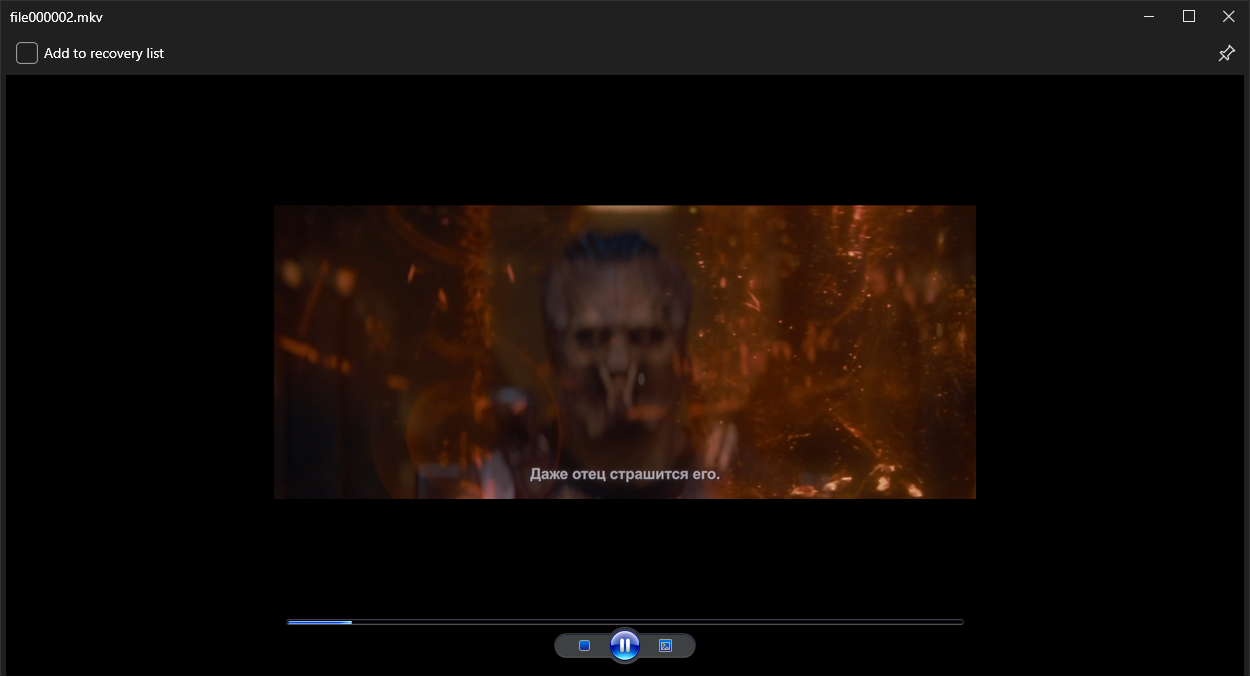
Disk Drill supports all major video formats: MP4, MOV, AVI, MKV, WMV, FLV, 3GP, M2TS, MTS, MPEG, MPG, VOB, RM, RMVB, and AVCHD. We couldn’t test all these formats - but the ones we did - were recovered in the first attempt.
Pros and Cons:
| PROS | CONS |
| Powerful recovery engine | Slightly slower scan speed than top competitors |
| Clean, modern guided interface | Professional codec support is inconsistent |
| Full recovery of video files in standard deletion tests | Paid plan is relatively expensive |
| Available for Windows and Mac | 100MB free recovery limit - is less than most competitors. |
| Supports all popular video file formats |
|
Pricing: $89/year
Disk Drill’s free recovery limit isn’t useful for recovering anything more than 1 small video file. It’s just a try-before-you-buy feature allowing recovery of 100MB files. The paid plan is slightly expensive than competitors like Stellar- but a lot cheaper than EaseUS. It's also the best option if you are looking for something that integrates a comprehensive health monitoring feature.
Quick Verdict:
Wondershare Recoverit is the most technically sophisticated video recovery tool in our test group, offering the deepest scan engine and support for advanced scenarios, including fragmented data recovery. However, for accidental deletion or in case of quick format scenarios, Stellar or EaseUS may be faster and simpler to use. Still, when the stakes are high and the recovery is complicated, Recoverit's advanced engine is worth the additional cost and complexity.
Installation and UI Experience:
Every tool in our list was easy and quick to install, and Wondershare Recoverit was no exception; it hardly took us 1 minute to install the tool on our Windows system. As soon as you launch it - the first impression of the tool makes a mark. It has the most advanced and cutting-edge dashboard among all competitors. It does have a slightly steeper learning curve, but the additional options are useful in the right hands.
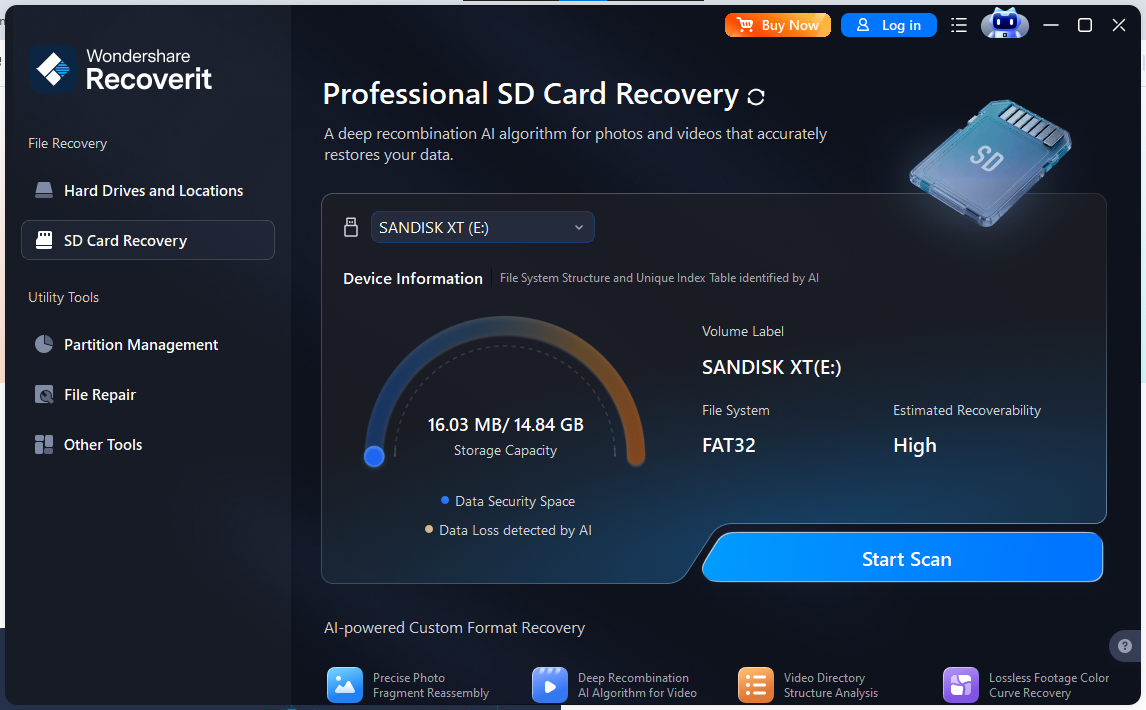
The main menu organizes recovery scenarios into clear categories: Hard Disk Drive Recovery, External Device Recovery (USB drives, SD cards, cameras), Recycle Bin Recovery, and a Remote Recovery mode that allows you to connect to another computer over a local network and recover its files without physically moving the drive. This is useful for remotely helping a family member recover files from across the country.
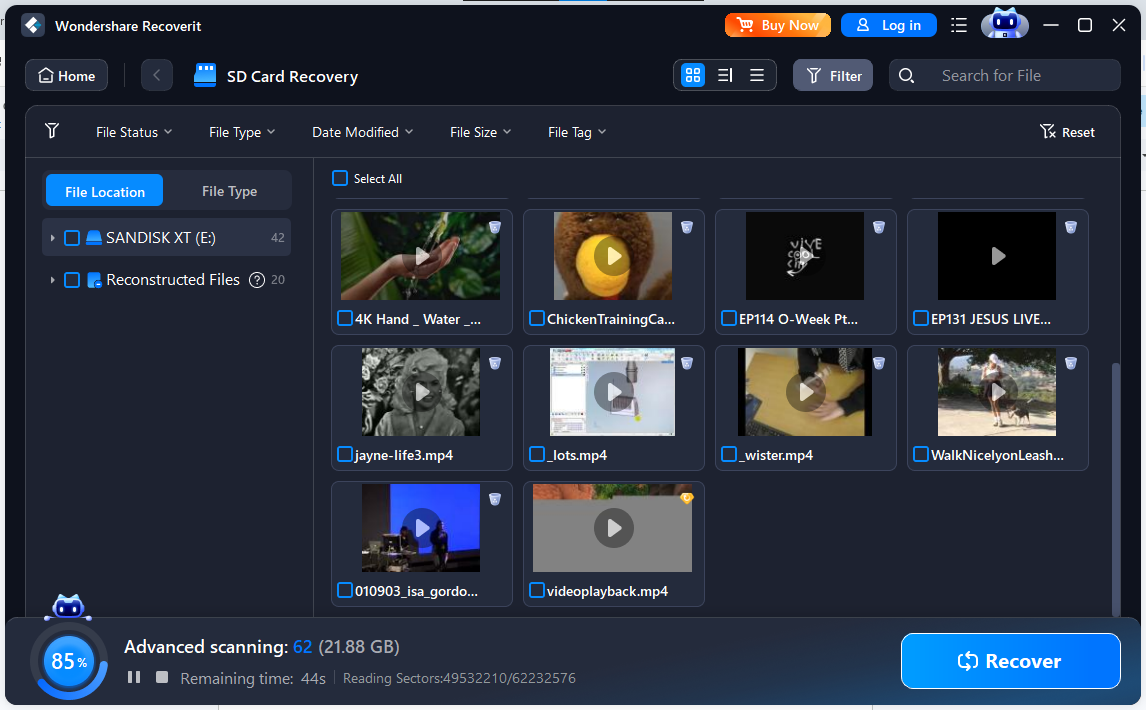
In our standard benchmark tests, Recoverit delivered good overalll results for recovery of video files. The deep scan completed in around 3 minutes on the 16GB SD card, placing it in a better position than many other tools for speed.
Where Recoverit truly distinguished itself was in recovering fragmented large video files: in a test involving HD MKV files ranging from 1GB to 3GB, Recoverit recovered 2 of the 3 large video files in playable condition, even after new video files were added to the SD card.
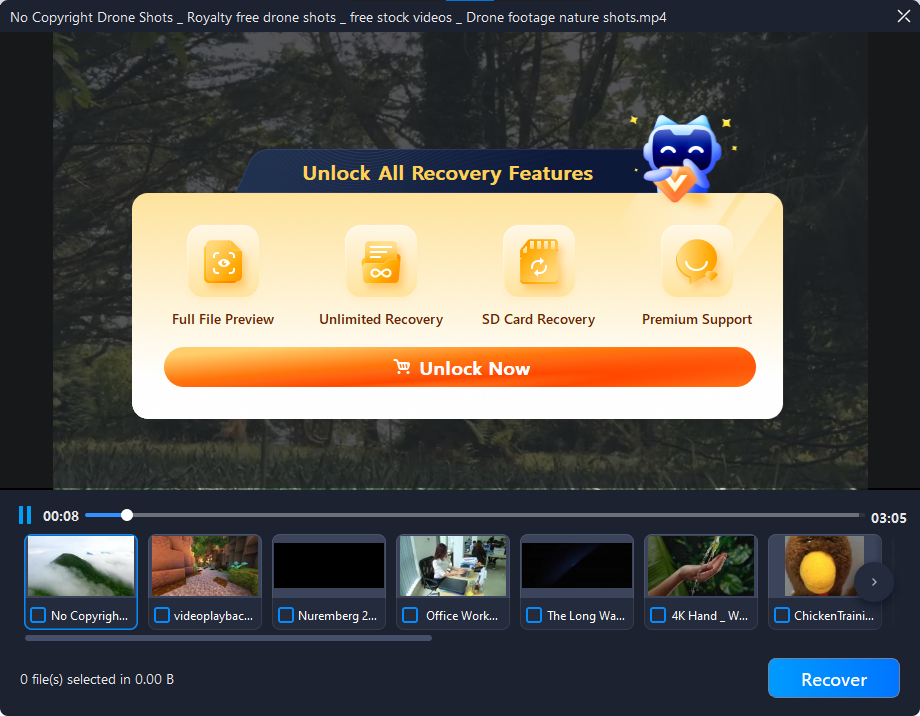
Recoverit is made for technically complex recovery scenario - such as fragmented data, or cases where simple scan-and-recover hasn't worked with other tools. The tool adds support for almost all video formats. However, previews of recovered videos are blocked unless you purchase the tool. However, you can recover files up to 100MB for free - it’s like their try-before-you-buy feature.
Pros and Cons:
| PROS | CONS |
| Commendable recovery in benchmark tests with an advanced scanning engine | Preview feature for video files is blocked with paywall |
| Enhanced Recovery mode for large, fragmented video files | A bit slower scanning speed than others |
| Available for Windows and Mac | The interface is a bit complex for beginners |
| Remote Recovery mode for network-connected devices | Only 100 MB of free recovery is less than many competitors. |
Pricing: $86.99/year
After offers and discounts, Recoverit’s monthly plan stood at $45.99, whereas the annual subscription offers great value at $46.99. As this aggressive pricing is indicative of the current discounts, it may get updated over time. If you are considering this software for your recovery needs, the annual plan is the more cost-effective recommendation.
Not every tool performs equally well across all platforms and devices. The following subsections give you the top recommendation for your specific operating system or storage device type, along with the reasoning behind each pick.
For Windows users, Stellar Photo Recovery is the top overall recommendation, supporting Windows 8, 8.1, 10, and 11 with native 64-bit builds optimized for NTFS, FAT32, exFAT, and ReFS file systems.
It handles all common and extreme Windows data loss scenarios, including recovery from NTFS partitions, quick formatted USB drives, and corrupted system drives. EaseUS Data Recovery Pro is another best Windows alternative for users who prefer the 2GB free recovery tier or need AI-enhanced video repair capabilities. For Windows users comfortable with a command-line UI, PhotoRec is a completely free option that delivers reliable results for simple deletion recovery scenes.
Stellar Photo Recovery's native Mac build is the top overall recommendation, delivering excellent performance on both APFS and HFS+ file systems, and is fully optimized for Apple Silicon chips (M1 through M5). EaseUS Data Recovery for Mac provides a 2GB free tier advantage on Mac as well.
If you’ve read this entire blog word to word – this conclusion isn’t for you as you already know the inside out. But if you are short on time and want to make a quick decision, let’s speed up the things for you. The blog is a deep dive of hands on testing across 15 different video recovery tools and 4 distinct data loss scenarios. To save you from digging the raw technical data you can refer the top-most table of the blog. It’s almost impossible to conclude and suggest you one tool that is best among all. But, here’s an absolute bottom line on which software you should consider for which situation:
Data Recovery Expert
This article was Reviewed by Rohit Arora, a Data Recovery Expert at Stellar Data Recovery.
Senior Content Writer
This article was written by Totan Banerjee , a Senior Content Writer at Stellar Data Recovery.
May 25, 2026| 9 min read
July 22, 2026| 9 min read
July 22, 2026| 9 min read






 9 min read