

-1847.jpg)
Avoid These 5 Mistakes After iPhone Data Loss (and How to Recover Data)
January 7, 2026| 4 min read



Summary: Is your iPhone water-damaged? Try to dry your device using silica gel packets or the uncooked rice method and then evacuate the SIM card; if necessary, disassemble the device to fix it. Follow these tips to save a water-damaged iPhone and dry it to prevent any further damage. Here's what you should - and shouldn't - do to fix a water-damaged iPhone.
“Hey there! I accidentally spilled water on my iPhone 16 Pro yesterday, and it won`t turn on anymore. I was pretty sure I retrieved the phone within 10 seconds, yet it’s not working! Is there a way to save and fix a water-damaged iPhone?”
If you’ve ever accidentally dropped your phone in water or drenched it in rain, then you’re not alone. From a split cup of coffee or water to dropping it in pools, bathtubs, or toilets, your iPhone can be water-damaged due to various reasons.
With new-generation Apple devices, water exposure isn’t an immediate death sentence for your iPhone as it used to be. But it can still create issues in your iPhone, such as:
While the new iPhones have good water-resistant capabilities, this doesn’t mean they are totally immune to water. Being electronic devices, water can seriously damage them.
This article shares several best practices that can help you save a water-damaged iPhone. But first, let’s understand how water-resistant your iPhone is.
The water resistance of the smartphones is rated by the “ingress protection” code, also called IP rating.
Apple rates iPhone water resistance using the IP (Ingress Protection) standard. The second digit in the IP rating defines liquid resistance on a scale of 0–9. Most recent iPhones carry IP68, meaning they can withstand submersion in controlled laboratory conditions — not in swimming pools, the sea, or under running tap pressure.
1. Remove the iPhone from water immediately.
2. Power it OFF (don't check if it still works — water + electricity = short circuit).
3. Remove any case or screen protector — they trap moisture.
4. Gently shake the device with the Lightning/USB-C port facing DOWN to expel water.
5. Wipe the exterior dry with a lint-free cloth.
6. Do NOT plug it in, even to check battery level.
This rating includes two numbers: the first number indicates protection against solids, such as dust, whereas the second demonstrates resistance to liquids, mainly water. For example, the iPhone 12 has a rating of IP68, which means it provides six levels of protection from solids and eight levels of protection from liquids.
There are multiple types of IP ratings, but IP67 and IP68 are mainly applied to iPhones.
Here’s the list of the last few generation iPhone with their IP rating
|
iPhone Model |
IP Rating |
Water Resistance |
|
iPhone 16 / 16 Plus / 16 Pro / 16 Pro Max |
IP68 |
Up to 6 meters for 30 minutes |
|
iPhone 15 / 15 Plus / 15 Pro / 15 Pro Max |
IP68 |
Up to 6 meters for 30 minutes |
|
iPhone 14 / 14 Plus / 14 Pro / 14 Pro Max |
IP68 |
Up to 6 meters for 30 minutes |
|
iPhone 13 / 13 mini / 13 Pro / 13 Pro Max |
IP68 |
Up to 6 meters for 30 minutes |
|
iPhone 12 / 12 mini / 12 Pro / 12 Pro Max |
IP68 |
Up to 6 meters for 30 minutes |
|
iPhone 11 / 11 Pro / 11 Pro Max |
IP68 |
Up to 4 meters for 30 minutes |
|
iPhone XS / XS Max |
IP68 |
Up to 2 meters for 30 minutes |
|
iPhone X / XR / 8 / 8 Plus / 7 / 7 Plus / SE (2nd & 3rd gen) |
IP67 |
Up to 1 meter for 30 minutes |
|
iPhone 6s and earlier |
None |
No official water resistance |
Most iPhones offer a certain level of water resistance, but it doesn’t mean an iPhone dropped in a swimming pool or a bucket full of water is immune to any damage. Moreover, not every repair step will help you fix a water-damaged iPhone, and some can complicate things further. Before we start on potential steps to save your water-damaged iPhone, let’s first look at some absolute things that worsen the cause and should be avoided at all costs.
Your iPhone should automatically power off when submerged. If it does not, power it off manually without delay. Pressing buttons forces water deeper into the device's internal circuits. Turn your phone ON only if you are sure water or moisture content from the exterior and interior is completely dry. Turning ON the water-damaged iPhone might cause water to reach inside the device, causing it to malfunction.
Charging a wet iPhone pushes 5V through a liquid-bridged circuit board, dramatically accelerating electrolytic corrosion. If your iPhone displays a 'Liquid Detected in Lightning Connector' or 'Liquid Detected in USB-C Connector' alert after getting wet. Apple strongly advises waiting until the connector is completely dry (typically at least 30 minutes in a warm, dry location) before connecting any cable.
NOTE:
iPhones running iOS 14 and later display a 'Liquid Detected' warning when moisture is sensed in the port.
Tap 'Dismiss' — do NOT tap 'Emergency Override' unless it is a genuine emergency.
The alert may appear even hours after the initial exposure as moisture moves inside.
This feature is available on iPhone X and later models.
Exposing internal components to temperatures above 35°C can warp connectors, melt adhesive seals, and damage the OLED display. A cool-air fan is the only acceptable at-home heat source.
If you drop your iPhone in water, the following methods can save your iPhone from potential damage.
Remove your iPhone from the water right away. Once retrieved, turn it off immediately. If there is any iPhone cover or screen guard to protect your phone, remove it, as they might hold moisture. Use a paper towel or cotton cloth to wipe the iPhone’s exterior.
After drying the iPhone’s exterior, remove the SIM card tray, if not using an e-SIM. Although SIM cards have a watertight seal, getting them out helps. Use a paper towel to dry the SIM card and the tray.
While Apple recommends simply wiping the iPhone dry or tapping excess water out of the ports, we recommend the below-mentioned ways to ensure your iPhone is as dry as possible.
You need to place the iPhone in a warm and dry place so the water inside the phone can evaporate. Place it in a nearby window with proper sunlight, but do not expose the device to harsh sunlight.
Place it in uncooked rice
The uncooked rice trick used to be the go-to method to dry any visible liquid in iPhone, as rice absorbs moisture quickly. Place the iPhone in a bag or bowl of rice for a day or two to ensure the water traces inside the phone are absorbed entirely. However, this method is slightly risky, as uncooked rice can push grains and dust in the charging port of your device.
Dry it with silica gel packets
If the water has seeped into the internal parts of the iPhone, try burying it in a heap of silica gel bags in an airtight container. This helps in absorbing the moisture from the inside of your iPhone. Using silica gel packets is a safer alternative to the uncooked rice method for drying a wet iPhone, as nothing will get clogged in the ports.
Use a hairdryer (if it has a cool wind setting)
If your hair dryer has a cool wind setting, you can use it to dry wet iPhone. While drying the iPhone, keep the hair dryer in low mode and keep your iPhone at a distance so that air blowing doesn’t cause any damage.
Or, you can keep your iPhone under a cool air fan to dry it.
If drying the iPhone via the uncooked rice method or silica gel packet doesn’t work, consider dismantling it as your last resort. You can use DIY repair tips to open the device to dry it out or go to any trusted tech expert.
Caution: We wouldn’t recommend dismantling the iPhone using DIY tips, as it may worsen the problem.
Dismantle your iPhone carefully, air-dry its interior, and assemble it back after a few hours. Also, if the Liquid Contact Indicators inside the iPhone have already detected water damage, opening the phone invalidates your warranty coverage.
If all the above efforts fail to fix the iPhone from water damage, you must check if the device’s warranty is still valid. If it is, call your manufacturer and request a repair or replacement. If it is invalid, visit an Apple Genius Bar to repair your cell phone.
The longer you wait to take your iPhone to an Apple Genius bar, the more damage it incurs. If you cannot dry the wet iPhone by following the manual methods mentioned above, rush to an Apple Genius Bar to get it repaired and minimize the chances of further damage.
A free and highly effective method to remove water trapped in the speakers is to use Apple's built-in Water Eject shortcut (available in the Shortcuts app). Alternatively, third-party apps like Sonic or Garageband can generate a low-frequency tone (165 Hz) that vibrates water out of the speaker grille — the same technology used in the Apple Watch's Water Lock.
Speaker Water Eject - Quick Steps:
Open the Shortcuts app on your iPhone (iOS 13+).
Search the Shortcuts Gallery for 'Water Eject'.
Add the shortcut, then tap it and select 'Begin Water Ejection'.
Alternatively, ask Siri: 'Run Water Eject'.
Repeat 3–4 times for best results.
Liquid Contact Indicator, or LCI, is the new way to determine whether or not your iPhone is exposed to water damage. An LCI is generally of white or silver color; however, when it comes in contact with water or other liquids, it turns red.
See the table to learn where the indicators are planted in your respective iPhone, depending upon its model.
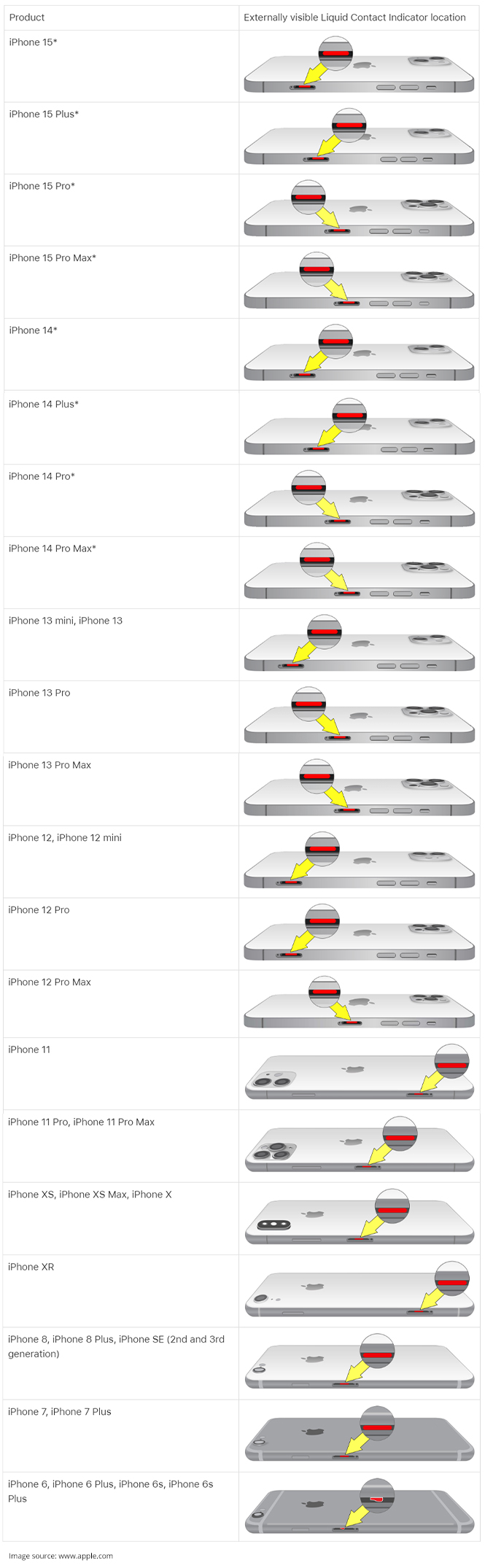
Once you have powered on your water-damaged iPhone after drying, it is possible to recover data from it. There are two ways to recover lost data from water-damaged iPhones: backup services or professional iPhone data recovery software.
Let’s see various scenarios where you can recover data from a water-damaged iPhone:
If your iPhone won’t turn on even after drying the wet iPhone using the tips mentioned above, it has short-circuited or water has eroded some of its internal components. In such a situation, use any backup service to recover your iPhone data.
If you have enabled iCloud backup on your iPhone, you can easily restore your data. You can visit the official iCloud website and log into your account to save the lost data on your computer. Or, set up your new iPhone using the existing iCloud credentials to restore the data of your previous iPhone.
If you turn your iPhone back on again, but its data is lost, try setting up your phone with your existing iCloud account to recover the data. However, if you haven’t enabled iCloud backup, it is recommended that you use reliable iPhone data recovery software like Stellar Data Recovery for iPhone. This software recovers deleted/lost photos, videos, audio, messages, voice memos, calendars etc. from iPhone, iPad, iTunes, and iCloud backup files.
The software supports recovery in all data loss scenarios like water-damaged devices, accidental deletion, failed iOS updates, iPhone stuck in recovery mode, etc. This iPhone recovery software is compatible with all variants of iPad and iPhone, including the series of iPhone 16/15/14/13/12/11 and below.
We hope you fix the water-damaged iPhone after following the above suggestion. However, it would be best if you were extra careful to protect your iPhone from any type of water damage. Here are some best practices you must follow:
Data Recovery Expert
This article was Reviewed by Rohit Arora, a Data Recovery Expert at Stellar Data Recovery.
Senior Content Writer
This article was written by Vishakha Singh , a Senior Content Writer at Stellar Data Recovery.
January 7, 2026| 4 min read
July 22, 2026| 4 min read

November 6, 2025| 4 min read






 4 min read